 dailytech.ai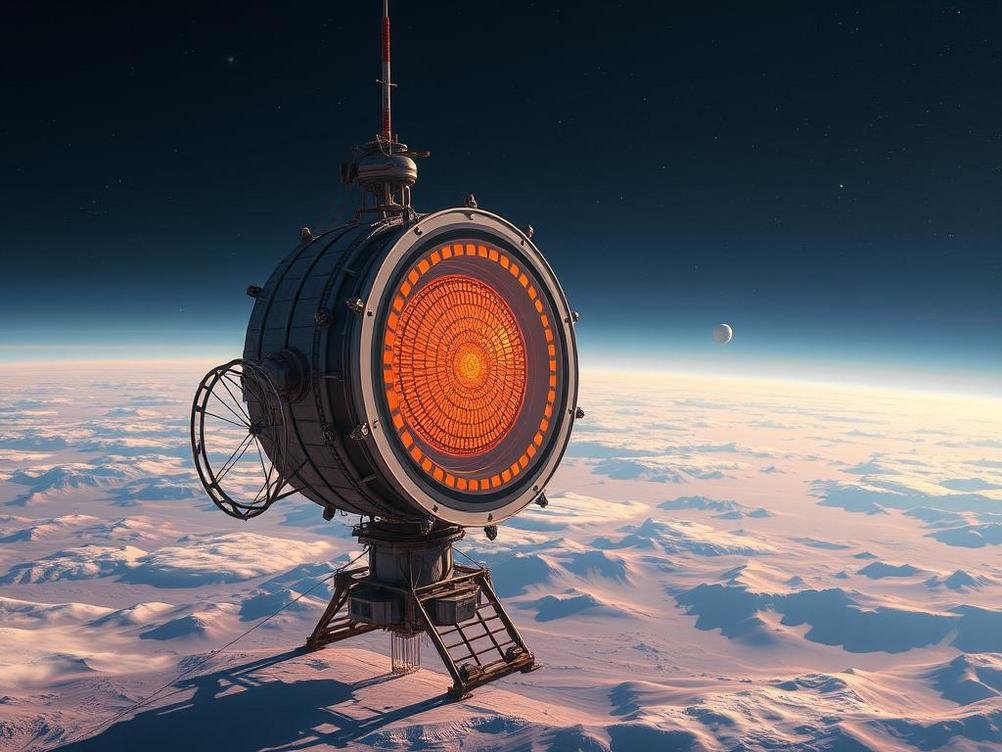
Project Suncatcher: The Wild Idea of Running AI Supercomputers in Space
Okay, picture this: you’re staring up at the night sky, pondering the mysteries of the universe, and suddenly it hits you—why not stick a bunch of massive computers up there to crunch AI data? Sounds like something out of a sci-fi flick, right? Well, that’s pretty much the gist of Project Suncatcher, this ambitious research moonshot that’s aiming to scale machine learning compute right in the vacuum of space. Announced recently, it’s got tech enthusiasts buzzing because, let’s face it, our Earth-bound data centers are starting to feel a bit cramped and power-hungry. With AI models getting bigger and thirstier for energy, someone’s gotta think outside the box—or in this case, outside the atmosphere. Project Suncatcher isn’t just some pie-in-the-sky dream; it’s backed by serious brainpower from researchers who see space as the next frontier for computing. Imagine harnessing endless solar power without the hassle of Earth’s gravity, weather, or those pesky electricity bills. It’s like giving your AI a vacation home on the moon, but instead of lounging, it’s working overtime to solve complex problems. In this article, we’ll dive into what makes this project tick, the challenges it faces, and why it could be a game-changer for the future of artificial intelligence. Buckle up, folks— we’re blasting off into the world of space-based AI!
What Exactly is Project Suncatcher?
At its core, Project Suncatcher is a bold initiative to build and deploy massive computing infrastructure in space, specifically tailored for machine learning tasks. The name itself evokes images of capturing the sun’s rays, which is spot on because the project plans to rely heavily on solar energy to power these orbital data centers. Unlike traditional setups on Earth, where servers guzzle electricity and need constant cooling, space offers a unique environment: unlimited sunlight in orbit and the natural chill of the void for heat dissipation. It’s like the universe’s gift to overworked engineers who’ve been pulling their hair out over data center inefficiencies.
The brains behind this come from a collaboration between space agencies, tech giants, and AI research labs. Think NASA meets Google DeepMind, with a sprinkle of SpaceX flair. They’re not just talking about launching a few servers; the vision is for scalable clusters that can grow as needed, potentially orbiting Earth or even stationed on the moon. Early concepts suggest these systems could handle petabytes of data processing without the environmental footprint that plagues terrestrial facilities. And hey, if you’ve ever dealt with a overheating laptop, imagine scaling that frustration to AI supercomputers—space might just be the cool-down we need.
Why Take AI Computing to Space? The Big Motivations
Let’s get real: AI is exploding, and so is its appetite for compute power. Training models like GPT-4 or whatever comes next requires insane amounts of energy— we’re talking the equivalent of powering small cities. On Earth, that’s leading to skyrocketing carbon emissions and heated debates about sustainability. Project Suncatcher flips the script by tapping into the sun’s boundless energy. In space, solar panels can operate at peak efficiency without clouds or night-time interruptions, potentially providing a clean, infinite power source. It’s like swapping your gas-guzzling car for an electric one that charges itself forever.
Beyond energy, there’s the scalability factor. Earth’s real estate is limited, and building more data centers means dealing with regulations, land costs, and community pushback. In space? The sky’s literally the limit. You could expand modules as AI demands grow, creating a floating supercomputer network. Plus, think about latency— for applications like real-time satellite imagery analysis or global weather predictions, having compute power in orbit could shave off precious seconds in data transfer. It’s not just efficient; it’s strategically smart, especially for industries like defense or climate monitoring where every millisecond counts.
And let’s not forget the cool factor. Remember when cloud computing was the big thing? This is cloud computing on steroids, literally above the clouds. It’s inspiring a new generation of engineers to dream big, pushing the boundaries of what’s possible.
The Tech Behind the Magic: How It All Works
Diving into the nuts and bolts, Project Suncatcher relies on advanced solar arrays that are way more efficient than what we use down here. These aren’t your backyard solar panels; they’re high-tech, lightweight designs that can unfold in space to capture maximum sunlight. The energy harvested powers specialized AI chips designed to withstand cosmic radiation and extreme temperatures. It’s a far cry from your average GPU farm— these bad boys are ruggedized for the harsh space environment, with redundancies to handle solar flares or micrometeorites.
Communication is key, so the project incorporates laser-based data links for high-speed transfers between space and Earth. Imagine beaming model updates or training data at speeds that make fiber optics look slow. For machine learning specifically, the setup allows for distributed computing where tasks are split across orbital nodes, reducing bottlenecks. Researchers are even exploring quantum computing elements, though that’s still in the experimental phase. If you’re into tech specs, check out the preliminary whitepapers from the project’s site— they geek out on everything from thermal management to error correction in zero gravity.
- Solar power harvesting: Unlimited, clean energy source.
- Radiation-hardened hardware: Built to last in space’s tough conditions.
- Laser comms: For lightning-fast data exchange.
Challenges and Hurdles: Not All Smooth Sailing
Of course, launching AI into space isn’t without its headaches. The upfront costs are astronomical— pun intended. Building and launching these modules could run into billions, and that’s before you factor in maintenance. How do you fix a glitchy server when it’s orbiting at 17,000 mph? Robotic arms or future space mechanics, maybe, but it’s complicated. Then there’s the regulatory maze: international space laws, spectrum allocations for communications, and ensuring it doesn’t turn into space junk.
Another biggie is data security. With sensitive AI models floating around, literally, there’s risk of cyber threats from Earth or even interstellar hackers— okay, that last one’s a stretch, but you get it. Radiation can flip bits in memory, leading to errors in computations, so error-correcting codes are a must. And let’s talk about the human element: training astronauts or engineers for this niche field isn’t cheap or easy. Despite these bumps, the project team is optimistic, drawing lessons from the International Space Station’s success.
It’s like trying to bake a cake in zero gravity— possible, but you might end up with frosting everywhere. The key is iterative testing, starting with small prototypes in low Earth orbit.
Real-World Applications: From Earth to the Stars
So, what could this mean for us mere mortals? In climate science, space-based AI could process satellite data on the fly, predicting natural disasters with unprecedented accuracy. Think faster warnings for hurricanes or wildfires, saving lives and property. In healthcare, it might accelerate drug discovery by running massive simulations without Earth-bound power constraints. Imagine modeling protein folding at scales we’ve only dreamed of.
For everyday folks, it could supercharge services like personalized education or virtual assistants that learn in real-time from global data streams. Even entertainment gets a boost— AI-generated movies or games could be created faster, with compute power that’s always on. And don’t overlook space exploration itself: these systems could guide autonomous rovers on Mars or analyze exoplanet data for signs of life. It’s like giving humanity a superbrain in the sky.
- Climate modeling: Real-time predictions.
- Drug discovery: Faster simulations.
- Space exploration: Autonomous decision-making.
The Future Outlook: Where Do We Go From Here?
Project Suncatcher is still in its early stages, with prototypes expected to launch in the next few years. Partnerships are forming, like with companies such as SpaceX for rocket tech or NVIDIA for AI hardware. The timeline? Optimistically, we could see operational clusters by 2030, but space projects often face delays— remember how the James Webb Telescope kept getting pushed back?
Ethically, there’s debate: Should we be cluttering space with more stuff? Proponents argue it’s worth it for the green benefits, potentially offsetting Earth’s energy crises. As AI evolves, this could democratize access to high-powered computing, leveling the playing field for smaller nations or startups. It’s exciting to think about a world where compute isn’t a bottleneck anymore.
Conclusion
Wrapping this up, Project Suncatcher represents a thrilling leap forward in blending AI with space tech. It’s not just about solving today’s compute shortages; it’s about reimagining what’s possible tomorrow. From endless solar power to zero-gravity efficiencies, this moonshot could redefine how we approach machine learning on a cosmic scale. Sure, there are challenges, but isn’t that what makes innovation fun? If we pull this off, we might look back and say this was the moment AI truly went interstellar. So, keep your eyes on the skies— the future of computing is up there, waiting to be unleashed. What do you think— ready to join the space AI revolution?










Leave a Reply