dailytech.ai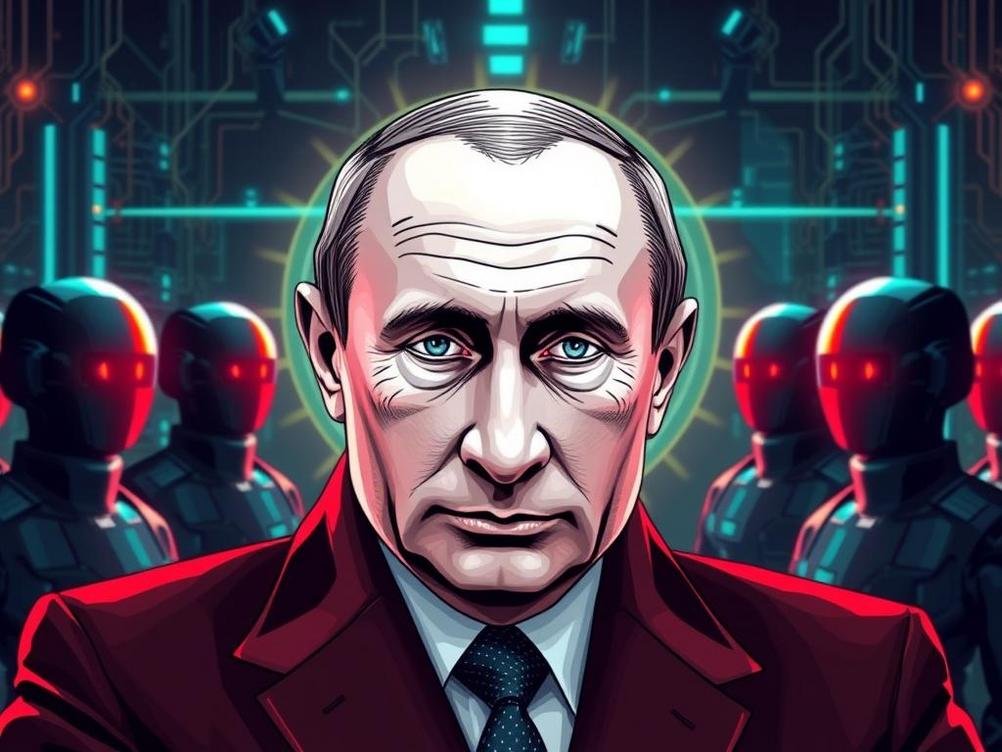
Putin’s Bold Bet: How Nuclear Energy Could Supercharge Russia’s AI Game
Imagine this: You’re scrolling through your phone, binge-watching some AI-generated cat videos, and suddenly you realize just how much juice all that tech guzzles. Yep, we’re talking about electricity, and lots of it. Now, picture Vladimir Putin stepping up to the mic and saying, “Hey, Russia’s got the perfect fix – nuclear energy to fuel our AI ambitions.” It’s like he’s pitching a blockbuster movie where atoms team up with algorithms. But is this just hot air from the Kremlin, or could it be a game-changer for the world’s AI race? As someone who’s geeked out on tech for years, I’ve got to say, this idea has me intrigued – and a little amused. After all, who knew that powering up chatbots might involve splitting atoms?
The truth is, AI isn’t just changing how we live; it’s demanding a massive energy overhaul. Think about it – training a single AI model can suck up as much power as a small town. According to reports from folks at the International Energy Agency, global data centers could gobble up 20% of the world’s electricity by 2030 if we don’t get creative. That’s wild! Putin’s statement, made during a recent chat about Russia’s tech future, highlights how countries are scrambling to keep up. He’s basically saying, “We’ve got the nukes, so let’s use ’em for something smarter than just defense.” It’s a mix of national pride and practical problem-solving, and it raises a bunch of questions: Can nuclear power really handle AI’s insatiable hunger? What does this mean for Russia’s economy and the global stage? Stick around, because we’re diving deep into this atomic AI adventure, blending facts, fun, and a dash of skepticism. By the end, you might just see why this could be the spark that lights up the next tech era – or maybe just a flashy headline that fizzles out.
The AI Energy Crisis: Why We Need More Power Than Ever
You know, it’s like trying to run a marathon on an empty stomach – AI is gobbling up energy faster than you can say ‘server farm.’ Back in the early days, we thought computers were just fancy calculators, but now they’re these power-hungry beasts processing petabytes of data. Putin’s nod to nuclear energy isn’t out of nowhere; it’s a response to the sheer scale of AI’s demands. For instance, OpenAI’s GPT models reportedly use enough electricity to power a few thousand homes for a year. That’s not chump change! So, if Russia wants to play in the big leagues with AI-driven innovations, they’re gonna need a reliable, high-octane fuel source.
What makes this tricky is the inconsistency of other energy options. Solar and wind are great for the planet, but they’re about as reliable as a caffeine-fueled intern on a Monday morning – sometimes they’re on fire, other times they’re out to lunch. Nuclear, on the other hand, offers steady, massive outputs without the weather-dependent drama. Imagine a world where AI data centers hum along 24/7, backed by reactors that don’t blink at peak hours. It’s not just about keeping the lights on; it’s about scaling up for things like autonomous vehicles or predictive analytics that could transform industries. But let’s not kid ourselves – this energy crisis is global, and Russia’s approach might just be a blueprint, flaws and all.
- First off, the stats are eye-opening: A study by the Lawrence Berkeley National Laboratory suggests that AI could increase global electricity demand by 10-20% in the next decade.
- Then there’s the environmental angle – while nuclear is low-emission, it’s not without risks, like Chernobyl-style nightmares that still haunt us.
- Finally, countries like the US and China are already experimenting with small modular reactors for tech hubs, so Russia isn’t alone in this race.
What’s Putin Really Saying? Decoding the Nuclear-AI Link
Okay, let’s cut through the political fog – when Putin talks about nuclear energy powering AI, he’s not just flexing muscles; he’s outlining a strategy. It’s like he’s saying, “We’ve got this old-school tech that can turbocharge our new-school ambitions.” Russia has a ton of nuclear infrastructure from its Soviet days, and repurposing it for AI could mean faster computing without building new grids from scratch. Picture vast server farms in Siberia, chugging away on clean, abundant nuclear power. That’s the vision, and it’s kinda poetic if you think about it – merging Cold War relics with cutting-edge machine learning.
But here’s the fun part: Is this just saber-rattling or a genuine plan? Putin’s comments often come with a side of geopolitics, especially amid tensions with the West. He might be hinting at energy independence, ensuring Russia doesn’t get left behind in the AI arms race. For example, if you look at Rosatom’s website, they’re already boasting about next-gen reactors that could support high-tech applications. It’s not all talk; they’ve got projects in the works. Still, one can’t help but chuckle – it’s like watching a bear try to dance ballet, elegant yet a bit clumsy.
To break it down, let’s consider the benefits: Stable energy means quicker AI development, from facial recognition for security to optimizing oil drills. On the flip side, it raises eyebrows about safety and international regulations. Rhetorical question time: Could this lead to a new era of AI dominance, or is it just another power play?
Russia’s Nuclear Arsenal: From Bombs to Bytes
Russia isn’t new to nuclear tech; they’ve been at it since the 1950s, and now they’re pivoting to something more futuristic. It’s like taking a classic car and souping it up for the drag race – exciting, but you worry about the engine blowing. With over 30 operational reactors, Russia has the capacity to generate massive amounts of electricity, which could directly feed into AI infrastructure. Think about it: A single plant could power data centers that train models for everything from weather prediction to economic forecasting.
What’s cool is how this ties into Russia’s AI initiatives, like their National AI Strategy launched a few years back. They’re investing billions in research, and nuclear energy is the unsung hero in the background. For instance, places like the Kola Nuclear Power Plant are already supplying energy to remote areas, and scaling that up for AI could be a no-brainer. But let’s add some humor – if AI ever gets sentient, will it thank the reactors or plot against them? Probably the latter, knowing sci-fi.
- Key fact: Russia produces about 20% of its electricity from nuclear sources, per World Nuclear Association data.
- Another angle: They’re exporting tech too, with deals in countries like India and Turkey, which could indirectly boost global AI efforts.
- Don’t forget the challenges, like maintaining aging facilities while innovating for AI’s needs.
The Upsides: Why Nuclear Might Be AI’s Perfect Match
Let’s get positive for a sec – nuclear energy and AI could be the dynamic duo we didn’t know we needed. It’s efficient, producing huge amounts of power with minimal fuel, which is music to AI developers’ ears. Imagine running complex simulations without blackouts; that’s the promise. Plus, it’s low-carbon, aligning with global climate goals while keeping AI’s servers humming. Putin’s pitch makes sense in this light – it’s about sustainable growth, not just dominance.
Take real-world examples: In France, which gets most of its power from nuclear, they’re using it to support tech giants like OVHcloud. Russia could follow suit, creating AI hubs that attract talent and investment. And hey, with advancements in small modular reactors, the tech is getting safer and more adaptable. It’s like upgrading from a flip phone to a smartphone – suddenly, everything’s possible.
The Downsides: Risks and Roadblocks in the Nuclear-AI Mix
Alright, no rose-tinted glasses here – nuclear energy isn’t all sunshine and rainbows, especially when paired with AI. We’re talking about potential meltdowns, waste management nightmares, and the ever-looming threat of misuse. If Russia ramps up nuclear for AI, what happens if things go sideways? It’s like giving a kid a flamethrower – exciting, but risky. Plus, the high costs of building and maintaining reactors could slow down AI progress if budgets tighten.
From an AI perspective, relying on nuclear might create vulnerabilities, like cyberattacks on power grids. Remember the Stuxnet virus that hit Iranian facilities? Yeah, that’s a real concern. And let’s not ignore the public backlash; folks are still spooked by historical disasters. So, while Putin’s idea sounds bold, it needs safeguards to avoid turning AI’s future into a thriller movie plot.
- Stat check: Nuclear accidents, though rare, can have devastating effects, as seen in Fukushima in 2011.
- Ethical dilemmas: How do we ensure AI powered by nuclear energy isn’t used for, say, surveillance overreach?
- Alternatives exist, like renewables, but they’re not as immediate.
Global Ripple Effects: How This Could Shake Up the World
This isn’t just Russia’s game; it’s a global chess match. If Putin’s plan succeeds, it could inspire other nations to rethink their energy strategies for AI. Countries like the US, with their own nuclear fleets, might double down, leading to an international arms race – but for tech, not weapons. It’s fascinating how one statement can ripple out, affecting everything from trade deals to environmental policies.
For the average Joe, this means cheaper, faster AI services down the line, but also potential tensions if energy sources become geopolitical tools. Look at how China’s AI investments are already intertwined with their energy grid. It’s a web, and Russia’s move could either strengthen alliances or spark conflicts. Either way, it’s a plot twist in the story of tech evolution.
Conclusion: Powering the Future or Playing with Fire?
Wrapping this up, Putin’s idea of using nuclear energy to fuel Russia’s AI dreams is a bold stroke that mixes innovation with a dash of risk. We’ve seen how AI’s energy needs are skyrocketing, and nuclear could be the steady hand guiding it forward. From the potential for sustainable growth to the pitfalls of safety and ethics, it’s clear this isn’t just about Russia – it’s about shaping a world where tech and power play nice together.
At the end of the day, whether this pans out as a triumph or a cautionary tale, it reminds us to think big but stay grounded. Who knows? Maybe in a few years, we’ll all be toasting to AI-powered everything, courtesy of atomic energy. So, here’s to keeping an eye on the horizon – the future of AI might just be brighter, and a whole lot more electrifying, than we imagined.