Why Students Are Rebelling Against AI Teachers: Is This the End of Human Classrooms?
Why Students Are Rebelling Against AI Teachers: Is This the End of Human Classrooms?
Ever had one of those days where you’re sitting in class, zoning out to a lecture that feels more robotic than your grandma’s old voicemail? Well, imagine if that lecture was actually delivered by a robot—or, in this case, an AI bot like ChatGPT. That’s what’s got students up in arms lately, with headlines screaming about protests over courses being handed off to artificial intelligence. It’s like we’ve jumped straight from blackboards to bots without stopping for coffee. But hey, is this a sign that AI is taking over education for good, or just a wake-up call that we might be losing the human touch? Think about it: we’ve all turned to AI for quick answers, whether it’s solving math problems or brainstorming essay ideas, but when it starts grading your papers or leading discussions, things get real. This backlash isn’t just about tech glitches; it’s about feeling connected, getting that spark of inspiration from a real person who’s been there, done that. From viral TikToks of students marching with signs like ‘We could have asked ChatGPT ourselves!’ to heated debates on Reddit, it’s clear folks are drawing a line in the sand. In this article, we’re diving into the chaos, exploring why this is happening, what it means for the future, and maybe even how we can blend the best of both worlds without turning schools into sci-fi flicks. Stick around, because if you’re a student, parent, or just a curious cat, this could reshape how we think about learning in 2025 and beyond.
The Unexpected Rise of AI in Classrooms
You know how AI snuck into our lives? It started with fun stuff like Netflix recommendations and then bam—it’s everywhere, including your kid’s algebra class. Over the past few years, schools have been experimenting with AI tools to handle everything from personalized tutoring to full-blown lesson plans. It’s efficient, sure, but has it gone too far? Take tools like Khan Academy’s AI integrations or even ChatGPT-powered platforms that adapt to your learning style. They promise to make education more accessible, especially in underfunded areas where teachers are stretched thin. But let’s be real, when students realized their professor was basically a fancy algorithm, it felt less like a upgrade and more like a downgrade.
Picture this: a metaphor for the modern classroom is like ordering fast food versus a home-cooked meal. AI is that quick burger—convenient, consistent, and available 24/7—but it lacks the warmth and nuance of something made with care. According to a 2024 report from EdTech Magazine, over 60% of U.S. schools have incorporated AI in some form, up from just 20% in 2020. That’s a huge jump, and while it’s helped boost test scores in subjects like math and science, it’s also sparked complaints about bland content that doesn’t challenge critical thinking. Students aren’t just rebelling; they’re pointing out that AI can’t replicate the impromptu debates or the empathetic advice that makes learning memorable. So, what’s the big draw for schools? Cost savings and scalability, but at what price?
- Pros of AI in education: It personalizes learning, offers instant feedback, and frees up teachers for more creative roles.
- Cons: It can lead to isolation, misinformation if not monitored, and a one-size-fits-most approach that ignores cultural nuances.
- Real-world example: In a pilot program at a California university, AI-taught courses reduced dropout rates by 15%, but student satisfaction plummeted due to the lack of interaction.
What’s Fueling the Student Revolt?
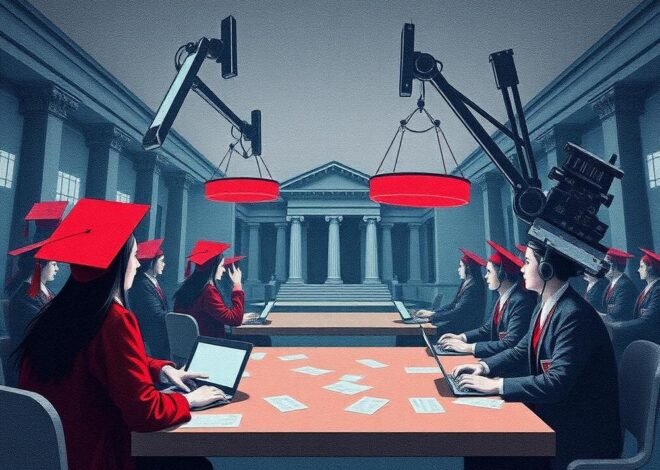
Okay, let’s get to the drama—why are students suddenly playing protest rock stars? It all boiled over when a university announced that an entire course on digital ethics would be AI-led, prompting walkouts and petitions. Students argued that if they could just ask ChatGPT the same questions, what’s the point of paying for education? It’s a fair gripe, especially when AI makes mistakes or gives biased responses. I mean, who wants to debate philosophy with a machine that doesn’t get sarcasm? This revolt isn’t new; it echoes past tech backlashes, like when social media algorithms messed with our feeds, but now it’s hitting the core of learning.
From my perspective, it’s about trust and authenticity. Humans bring stories, humor, and that gut feeling that AI can’t fake. Take the case of students at a UK college who shared their experiences on forums like Reddit—threads with thousands of upvotes detailing how AI lessons felt impersonal and error-prone. One student quipped, “It’s like talking to a really smart fridge; it knows facts, but can’t tell if you’re having a bad day.” Statistics from a 2025 survey by the National Education Association show that 70% of students prefer human teachers for subjects requiring emotional intelligence, highlighting a gap that AI just can’t fill yet.
- Common triggers: Over-reliance on AI leading to job losses for educators, privacy concerns with data collection, and the fear that critical skills like empathy are getting sidelined.
- Humorous take: If AI takes over, will we have robot detention? Probably not, but it might assign extra algorithms as punishment.
- Broader impact: This pushback could influence policy, with groups like the American Federation of Teachers advocating for regulations on AI in education. For more on this, check out their guidelines.
The Flip Side: Benefits We Can’t Ignore
Before we throw AI under the bus, let’s give it some credit—it’s not all doom and gloom. AI has supercharged education in ways we couldn’t have dreamed of a decade ago. For instance, tools like Duolingo or Grammarly use AI to make language learning interactive and fun, adapting to your mistakes in real-time. It’s like having a personal coach that never gets tired or judgmental. In under-resourced schools, AI bridges gaps by providing quality content to students who might otherwise miss out. But here’s the catch: it’s great as a sidekick, not the main act.
Think of AI as that enthusiastic intern who handles the grunt work so the boss—aka the human teacher—can focus on what matters. A study from Stanford in 2024 found that blending AI with traditional teaching improved engagement by 25%, especially for visual learners. Yet, students are rebelling because when AI takes center stage, it feels like we’re trading depth for efficiency. It’s a bit like relying on GPS for a road trip; it gets you there, but you miss the scenic detours and unexpected adventures.
- Key advantages: 24/7 availability, data-driven insights for better outcomes, and accessibility for students with disabilities.
- Potential pitfalls: Over-dependence can stifle creativity, as AI often recycles information without original flair.
- Examples: Platforms like Coursera use AI for course recommendations, helping millions, but students still crave the live Q&A sessions.
Real Stories from the Trenches
Let’s make this personal—hear from the students who’ve been there. Take Sarah, a college sophomore who told me in an online forum that her AI-taught history class felt like reading a Wikipedia page on repeat. “It was informative, but there was no passion, no debate,” she said. Stories like hers are popping up everywhere, from Twitter rants to campus protests, showing that AI isn’t just a tool; it’s disrupting the social fabric of education. It’s one thing to use AI for research, like on sites such as ChatGPT, but another to let it lead the charge.
This isn’t just isolated; it’s a global trend. In India, students protested similar implementations, arguing that AI ignores cultural contexts and local histories. It’s like trying to fit a square peg into a round hole—AI might work in theory, but in practice, it needs human tweaking. And let’s not forget the humor in it; one viral meme compared AI teachers to overly helpful but clueless relatives at family gatherings.
- Student insights: Many report feeling disconnected, with one survey noting 40% of participants felt less motivated in AI-led classes.
- Positive twists: Some students found AI helpful for reviewing material, turning it into a supplementary tool rather than a replacement.
- Broader lessons: These stories push for better integration, like hybrid models where AI handles basics and humans handle the rest.
How This Could Reshape Education’s Future
So, what’s next? This student uprising might just be the catalyst for a major overhaul in how we approach education. We could see policies mandating a balance, like requiring human oversight in AI-driven courses. Imagine schools evolving into hubs where AI assists with routine tasks, freeing teachers to foster creativity and emotional growth—it’s the best of both worlds. By 2030, experts predict AI will handle 30% of administrative duties, according to a UNESCO report, allowing more time for meaningful interactions.
But let’s keep it light; if we don’t get this right, we might end up with classrooms that are all screens and no soul, like a dystopian movie plot. The key is innovation with empathy, ensuring AI enhances rather than replaces. For instance, tools like Google Classroom’s AI features offer collaborative spaces that build community, but only if we use them wisely.
- Future trends: Expect more regulations, like the EU’s AI Act, which could influence educational tech standards. Check it out here.
- Opportunities: This could lead to new jobs in AI education design, blending tech skills with teaching expertise.
- Personal advice: As a learner, demand a mix—don’t let AI do all the talking.
Tips for Making AI and Humans Coexist in Education
If you’re a teacher, student, or admin trying to navigate this mess, here’s some straight talk. First off, treat AI as a tool, not a crutch—use it for things like grading multiple-choice tests so you can spend more time on one-on-one chats. Students, don’t shy away; learn to question AI outputs and verify facts, turning it into a skill-building exercise. It’s like having a superpower, but you still need to wear your cape responsibly.
And for parents, get involved—talk to schools about how AI is being used and advocate for balanced approaches. A fun idea: start family debates on AI topics to keep things engaging. Statistics show that schools with hybrid models see a 20% increase in student satisfaction, so it’s doable. Remember, the goal is to make education fun and effective, not automated and aloof.
- Practical tips: Set boundaries, like limiting AI to 20% of class time, and always include feedback sessions.
- Resources: Explore sites like Edutopia for ideas on integrating AI thoughtfully.
- Final thought: Keep the humor in learning; after all, AI might know quantum physics, but it can’t tell a good joke yet.
Conclusion
As we wrap this up, it’s clear that the student revolt against AI-taught courses isn’t just a fad—it’s a reminder that education is about more than data and algorithms; it’s about connection and growth. We’ve explored the rise of AI, the reasons for backlash, the benefits, real stories, future implications, and ways to balance it all. At the end of the day, technology should enhance our lives, not replace the irreplaceable human element. So, let’s push for smarter integration, where AI supports without overshadowing. Who knows, maybe this will lead to a brighter, more inclusive future for learning. Keep questioning, keep engaging, and remember: in the classroom of life, we’re all still learning.