dailytech.ai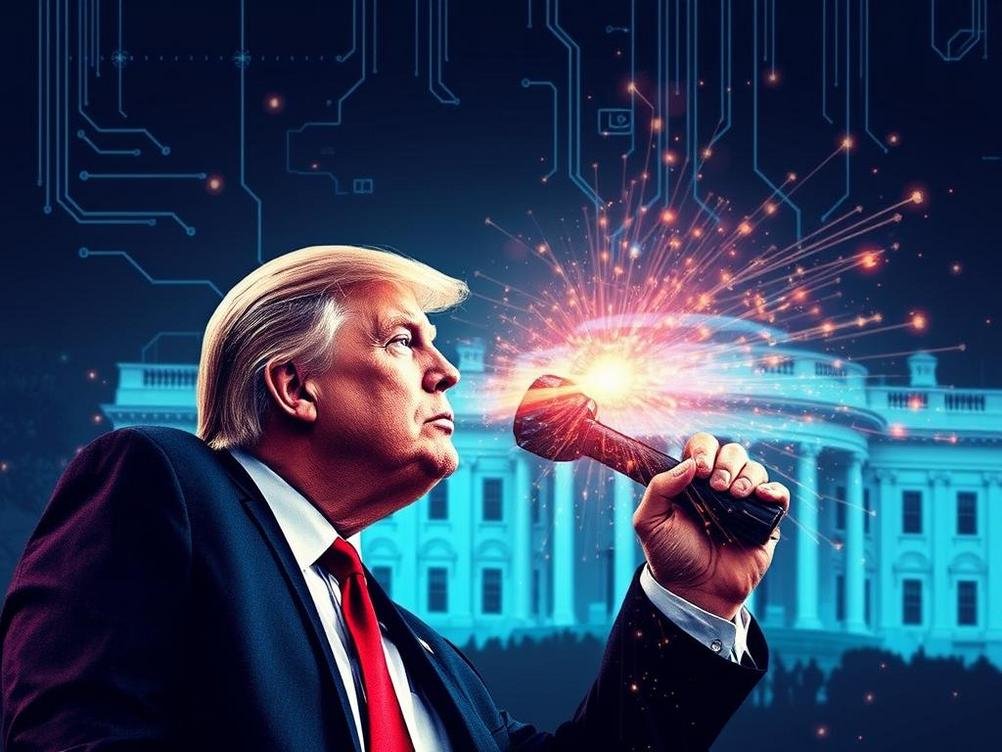
Is Trump About to Shake Up AI Rules and Spark a Tech Revolution?
Okay, picture this: You’re tinkering away on your latest AI project, maybe something fun like a chatbot that tells dad jokes or a smart assistant that actually remembers your coffee order. Then, out of nowhere, the big boss in the White House decides to throw a curveball at all those state-level rules governing AI. Yeah, that’s the buzz around former President Trump mulling over an executive order to override state regulations on artificial intelligence. It sounds like something straight out of a sci-fi flick, doesn’t it? But here we are in late 2025, and this could mean a massive shift in how we handle AI development, innovation, and even everyday tech we rely on.
Now, I’m no crystal ball reader, but let’s unpack this a bit. If Trump pulls the trigger, it might cut through the red tape that’s got states like California playing innovator cops with their strict privacy laws, while places like Texas are more hands-off. Imagine the chaos—or opportunity—that could create. Will this supercharge AI growth or leave us with a Wild West of unchecked tech? It’s got me wondering: What if this leads to faster breakthroughs in healthcare AI or, heck, even better video games? On the flip side, could it open the door to more risks, like data breaches or biased algorithms running amok? We’re talking about a potential nationwide reset that could affect everything from your smart home devices to the AI tools businesses use daily. Stick around, because in this article, we’ll dive into the nitty-gritty, share some real-world examples, and maybe even throw in a laugh or two along the way. After all, who doesn’t love a good tech drama?
What’s the Deal with Trump’s Potential AI Overhaul?
You know, it’s like when your nosy neighbor decides to rewrite the rules of the block party—suddenly, everything’s upside down. Reports from early 2025 suggest Trump is eyeing an executive order that could swoop in and override the patchwork of state laws on AI. This isn’t just about slapping a band-aid on regulations; it’s potentially about creating a unified federal framework. Think of it as the government saying, “Hey, we’re taking the wheel on this AI rollercoaster.” States have been all over the map—California’s got its rigorous privacy standards under the CCPA, while others are barely glancing at the tech. If this order happens, it could standardize things, making it easier for companies to innovate without jumping through hoops in every state.
But let’s not kid ourselves; this could ruffle feathers. Proponents argue it’d speed up AI adoption, especially in fields like autonomous vehicles or medical diagnostics. For instance, a company like Tesla, which has been pushing self-driving tech, might breathe easier without varying state restrictions. On the other hand, critics worry about losing local control—what if federal rules don’t account for regional differences? It’s a bit like trying to fit a square peg into a round hole. According to a 2024 report from the Brookings Institution, inconsistent state regulations have already slowed AI investments by about 15%, so a federal override might just be the jolt the industry needs.
And humor me for a second—if you’re an AI developer, this could mean fewer headaches. No more navigating a maze of laws that change with every state line. But is it all sunshine and rainbows? Probably not. We’ve seen how federal interventions can sometimes miss the mark, like when nationwide policies overlook specific community needs. It’s worth asking: Would this really level the playing field, or just centralize power in Washington?
How Could This Turbocharge AI Innovation?
Alright, let’s get to the good stuff—innovation! If Trump’s order goes through, it might just light a fire under AI development. Imagine cutting through the bureaucracy so startups can experiment without fearing a shutdown from overly strict state rules. For example, companies like OpenAI or Google are already pushing boundaries with tools like ChatGPT and Gemini, but state-by-state compliance slows them down. A federal override could mean faster rollouts of new AI features, perhaps even in education or entertainment.
To break it down, here are a few ways this could play out:
- Faster R&D cycles: With uniform regulations, teams could prototype and test AI models without regional roadblocks, potentially shaving months off development time.
- Increased investment: Investors love certainty, and a national standard might draw more funding. A study from McKinsey in 2025 projected that streamlined AI regulations could boost global AI spending by 20%.
- New job opportunities: Think about all the positions this could create—from AI ethicists to data engineers. It’s like opening a new lane on a crowded highway.
But hey, it’s not all high-fives. There’s a flip side where innovation might outpace safety. Remember when social media algorithms went wild and spread misinformation? We don’t want AI doing the same on a bigger scale. Still, if handled right, this could be the shot in the arm AI needs to tackle real-world problems, like climate modeling or personalized medicine.
The Downsides: What Could Go Wrong?
Okay, let’s pump the brakes a bit. Every silver lining has a cloud, and this AI overhaul isn’t exempt. Overriding state regulations might lead to a one-size-fits-none approach, ignoring local nuances. For instance, in states with strong privacy laws like Illinois, people are extra cautious about data usage due to things like the Biometric Information Privacy Act. A federal blanket could weaken these protections, exposing users to risks.
Here’s a quick list of potential pitfalls:
- Increased privacy breaches: Without tailored state rules, we might see more incidents like the 2023 data leaks that affected millions. It’s scary to think about AI systems gobbling up personal info without checks.
- Ethical slip-ups: AI bias is already a headache—remember those facial recognition tools that struggled with diverse skin tones? Looser regs could exacerbate that.
- Economic disparities: Smaller states might get left behind if federal policies favor big tech hubs. It’s like the cool kids at school getting all the perks while the rest tag along.
I mean, come on, who wants Big Brother meddling more than necessary? While the intent might be to foster growth, we’ve got to keep an eye on the human element. Statistics from a 2025 Pew Research survey show that 60% of Americans are already wary of AI’s impact on privacy, so this could fan those flames.
How Businesses and Everyday Folks Might Feel the Impact
Shift gears for a minute—let’s talk about how this shakes out for businesses and Joe Average. If state regs get sidelined, companies could expand quicker, but at what cost? A firm in New York might suddenly find it easier to deploy AI-driven marketing tools across the country, boosting efficiency and profits. On a personal level, you might see smarter apps that predict your shopping habits or health needs, but only if the rules allow it.
For example, healthcare providers using AI for diagnostics could benefit hugely. Imagine an AI system that spots diseases earlier than traditional methods—that’s gold. But if regulations loosen too much, patients could face issues like inaccurate predictions from poorly vetted algorithms. And don’t even get me started on job displacement; a 2025 World Economic Forum report estimates AI could automate 85 million jobs by 2027. So, while businesses might thrive, workers need safeguards.
It’s a mixed bag, really. If you’re a small business owner, this could be a game-changer, letting you compete with the big dogs. But if you’re just trying to keep your data private, you might feel exposed. Rhetoric question: Is faster progress worth the potential mess?
Global Ripples: How This Plays on the World Stage
Here’s where it gets interesting—AI isn’t just a U.S. thing. If Trump overrides state rules, it could influence global standards. Countries like the EU, with their stringent GDPR, might watch closely and adjust their own policies. Or, it could spark an international arms race in AI development, where the U.S. pulls ahead.
Take China, for instance; they’ve been pouring billions into AI with less red tape. If the U.S. loosens up, we might see more collaborations or even tensions. A metaphor: It’s like two chefs in a kitchen race—one with a full set of tools and the other tied up in knots. Plus, organizations like the UN are pushing for global AI ethics; a U.S. shift could either align with that or throw a wrench in it. In 2025, the OECD reported that harmonized AI policies could add $13 trillion to the global economy by 2030, so the stakes are high.
From an everyday perspective, this might mean better global tech access, like AI apps that bridge language barriers. But it could also lead to geopolitical hiccups. You never know; this might just be the nudge for worldwide cooperation or, yikes, more cyber conflicts.
What You Can Do to Stay Ahead of the Curve
So, what’s a regular person or tech enthusiast to do? Don’t just sit back—get involved. Start by educating yourself on AI policies; websites like EFF.org have great resources on digital rights. Join online forums or advocacy groups to voice your opinions—it’s like being part of a community watch for tech.
Here are some actionable steps:
- Advocate for balanced policies: Write to your representatives about what you want from AI regs.
- Protect your data: Use tools like VPNs or privacy-focused apps to safeguard your info in the meantime.
- Stay updated: Follow AI news sources for the latest, because this story is far from over.
It’s empowering, really. By staying proactive, you’re not just a bystander—you’re shaping the future. And who knows, maybe your input could influence the next big policy change.
Conclusion
Wrapping this up, Trump’s potential move to override state AI regulations is like a plot twist in a blockbuster movie—full of excitement, risks, and unknowns. We’ve explored how it could boost innovation, stir up ethical debates, and ripple out globally, all while touching on the everyday impacts. At the end of the day, it’s about finding that sweet spot between progress and protection. Whether this leads to a tech boom or a cautionary tale, one thing’s for sure: AI is evolving fast, and we all have a role in steering it right. So, keep an eye on the news, chat about it with friends, and let’s make sure the future of AI is as bright as it can be. Who’s with me?