dailytech.ai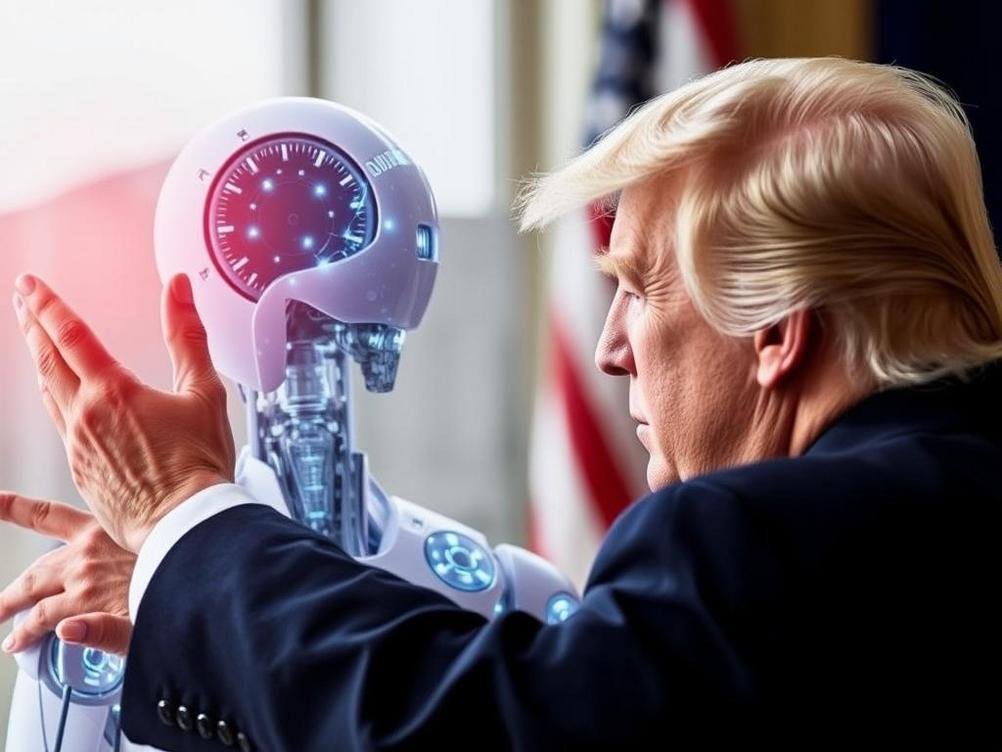
How Trump’s One-Rule AI Executive Order Could Flip the Script on Regulations
Imagine this: You’re sitting at your desk, sipping coffee, and scrolling through the news when you stumble upon a headline about a former president dropping a bombshell executive order on AI. Yeah, that’s right—Trump’s apparently gearing up to sign something called a ‘one-rule’ deal that could wave a magic wand over all those pesky state-level approvals for AI tech. It’s like he’s saying, ‘Forget the red tape, let’s get this innovation party started!’ But hold on, is this a genius move or a recipe for chaos? As someone who’s followed AI’s wild ride for years, I can’t help but chuckle at how this could shake things up. We’ve all dealt with bureaucracy that makes your head spin, right? From waiting forever for permits to launch a simple app to dealing with state-by-state rules that feel like playing Whac-A-Mole. This order, if it happens, might just cut through that mess and let AI innovators breathe easier. Of course, it’s not all sunshine and rainbows—there are risks, like opening the floodgates to unchecked tech that could go sideways. In this article, we’re diving deep into what this could mean, why it’s got people talking, and how it might affect everything from your daily gadgets to global tech trends. Stick around, because by the end, you’ll have a clearer picture of whether this is the AI breakthrough we’ve been waiting for or just another political plot twist.
What’s the Deal with This ‘One-Rule’ Executive Order?
Okay, let’s break this down without getting too bogged down in legalese. From what we’ve heard, Trump’s proposed executive order is all about streamlining AI regulations by introducing a single, overarching rule that bypasses the usual state-by-state approvals. Think of it like upgrading from a patchwork quilt of local laws to one big, unified blanket. No more jumping through hoops in California one day and then dealing with New York’s finicky rules the next. It’s aimed at speeding up AI development, especially in areas like machine learning and automation, which have been slowed down by what critics call ‘overregulation.’ I mean, who hasn’t been frustrated by red tape? Remember when it took ages to get your home Wi-Fi set up because of some outdated local codes? Multiply that by a thousand for AI companies trying to deploy cutting-edge stuff.
But here’s the fun part: This isn’t just about making life easier for tech giants like Google or OpenAI. It’s potentially a game-changer for smaller startups that don’t have the resources to navigate 50 different state bureaucracies. According to a report from the Brookings Institution, AI regulations vary so wildly across states that it costs businesses an estimated $10 billion annually in compliance. That’s a hefty price tag! If this order goes through, it could mean faster rollouts of AI tools, like those chatbots that help with customer service or even self-driving cars. On the flip side, though, you have to wonder if this is just a power play to centralize control. It’s like when your friend decides to be the DJ at a party and picks all the songs—sure, it might keep things flowing, but what if you wanted to hear something different?
- First off, the ‘one-rule’ approach might standardize safety and ethical guidelines, making it easier for everyone to play by the same rules.
- Secondly, it could encourage more investment in AI, with experts predicting the industry could grow by 20-30% in the next few years if red tape is slashed.
- And lastly, this isn’t entirely new—other countries like the EU have their own unified AI acts, so why not the US?
Why Even Bother Bypassing State Approvals?
Alright, let’s get real: State approvals for AI have been a nightmare for years. Each state has its own ideas about what’s safe, what’s ethical, and what’s just plain overkill. In California, for instance, you might need to prove your AI doesn’t bias against certain groups, while in Texas, the focus could be more on economic impacts. Trump’s order seems to say, ‘Enough is enough—let’s have one set of rules from the feds.’ It’s like trying to drive across the country without hitting every single speed trap; who has time for that? Proponents argue this will turbocharge innovation, allowing AI to evolve faster in fields like healthcare or finance, where every delay means missed opportunities.
Of course, there are pros and cons to this approach. On the pro side, it could lead to a boom in AI jobs—think millions of new positions in tech hubs—and even boost the economy. The World Economic Forum estimates AI could create 12 million more jobs by 2025, but only if we cut through the regulatory jungle. Humor me for a second: Imagine AI as a race car. State approvals are like putting speed bumps everywhere, slowing it down. With a one-rule system, it’s like clearing the track for a straight sprint. But wait, cons? Well, what if states have good reasons for their rules? Like protecting privacy or preventing biases that could harm communities. It’s a double-edged sword, isn’t it?
- Pro: Faster deployment of AI tech, which could revolutionize industries like agriculture with smart farming tools.
- Con: Potential for overlooking local issues, such as environmental impacts that vary by region.
- Another pro: Reduced costs for companies, freeing up cash for R&D rather than lawyer fees.
How This Could Supercharge AI Innovation
Picture this: With a single rule in place, AI developers could innovate without the fear of getting tangled in a web of state-specific red tape. That means quicker launches of everything from predictive analytics in business to personalized education apps. I’ve seen firsthand how bureaucratic delays can kill a project—back in my early days tinkering with AI prototypes, I lost months waiting for approvals that felt arbitrary. This order might just light a fire under the industry, pushing forward advancements like advanced neural networks or even AI in creative fields. And let’s not forget the economic ripple; the U.S. could leapfrog competitors like China, where AI regulations are already more centralized.
But it’s not all smooth sailing. While innovation might surge, we have to ask: At what cost? For example, if a unified rule doesn’t account for regional differences, we might see issues like AI systems that work great in urban areas but flop in rural ones. Take self-driving cars— they’ve faced pushback in places like Arizona due to safety concerns. A one-size-fits-all approach could overlook these nuances, leading to real-world headaches. Still, the potential is exciting; experts from MIT predict that streamlined regulations could accelerate AI adoption by up to 40%, opening doors to things like AI-assisted healthcare that saves lives faster.
- Streamlined rules could mean more funding for AI startups, with venture capital inflows possibly doubling.
- It might encourage cross-state collaborations, like sharing data for better AI models without legal barriers.
- Lastly, this could inspire a new wave of AI education, helping more people get involved in the field.
The Flip Side: What Could Go Wrong?
Now, don’t get me wrong—I’m all for progress, but let’s not gloss over the risks. Bypassing state approvals might open the door to some shady stuff, like AI systems that prioritize profits over people. We’ve already seen scandals, such as facial recognition tech that disproportionately affects certain ethnic groups, and without state-level checks, who’s going to catch that? It’s like giving a kid the keys to a candy store without any supervision—fun at first, but it could lead to a massive sugar crash. Critics worry this could undermine consumer protections, especially in sensitive areas like data privacy, where states like California have strong laws.
Another angle: This might concentrate power in Washington, making it harder for states to address local needs. For instance, what if a state wants stricter rules for AI in farming due to environmental concerns? A one-rule policy could steamroll that. And humorously speaking, it’s a bit like trying to fit everyone into the same pair of shoes—sure, it works for some, but others might end up with blisters. According to a recent Gartner report, over 60% of AI projects fail due to poor governance, so rushing this could exacerbate that.
- Risk of reduced accountability, potentially leading to more data breaches.
- Possible ethical lapses, like AI biases going unchecked.
- Increased legal challenges, as states fight back against federal overreach.
A Global Perspective: How Does This Stack Up?
Zoom out a bit, and you’ll see that the U.S. isn’t alone in this AI regulation game. Countries like the European Union have already rolled out their AI Act back in 2024, which sets a unified framework for ethical AI use. Trump’s order could be America’s answer to that, putting us on a more level playing field. But is it better or worse? The EU’s approach includes strict rules on high-risk AI, which has its merits, but it also slows innovation. In contrast, China’s more laissez-faire style has let them dominate in areas like surveillance tech, and this order might help the U.S. catch up.
From a global standpoint, this could influence international trade and partnerships. If the U.S. simplifies its rules, it might encourage more collaborations, like joint AI projects with allies in Asia or Europe. But, as always, there’s a catch—without robust safeguards, we risk exporting flawed tech that could backfire. It’s like hosting a potluck where everyone’s bringing dishes, but if one person’s recipe is off, it spoils the whole meal. Data from the OECD shows that countries with balanced AI policies see 15-20% more economic growth, so striking the right balance is key.
- The EU’s AI Act as a benchmark: It categorizes AI by risk levels, something the U.S. might adapt.
- China’s rapid advancements: They’ve deployed AI in everyday life, from traffic management to healthcare, thanks to less fragmentation.
- U.S. implications: This could boost exports, with AI tech becoming a major export category.
What This Means for Everyday Folks Like Us
At the end of the day, this isn’t just about bigwigs in Washington—it’s about how AI touches your life. If this executive order passes, you might see cheaper, faster AI-powered products, like smart home devices that actually work seamlessly across states. Or, hey, maybe even better job opportunities in AI fields if innovation picks up steam. But on the downside, it could mean less control over how your data is used, so keep an eye on your privacy settings. I remember when AI first hit the mainstream with things like Siri; it was exciting, but now we’re dealing with the fallout of unchecked growth.
Personally, I’m optimistic but cautious. This could empower more people to experiment with AI, like using tools for creative writing or personal finance. Yet, we need to stay vigilant—advocate for ethical standards and hold policymakers accountable. After all, AI is shaping our future, from the apps we use to the cars we drive, so getting this right matters.
- Potential benefits: Access to advanced AI tools that make daily tasks easier.
- Drawbacks: Increased exposure to risks like misinformation spreads.
- Tips for you: Stay informed and support organizations pushing for balanced AI policies, like the Future of Life Institute.
Conclusion
Wrapping this up, Trump’s potential ‘one-rule’ executive order on AI is a bold step that could either streamline the tech world or stir up a storm of unintended consequences. We’ve explored how it might boost innovation, the risks involved, and what it means on a global and personal level. At its core, this is about balancing progress with protection, ensuring AI serves us rather than overwhelming us. As we move forward, let’s keep the conversation going—after all, in a world where AI is everywhere, your voice matters. Who knows? This could be the spark that propels us into a brighter AI future, or a wake-up call to tighten the reins. Either way, stay curious and engaged; the next chapter in AI’s story is just beginning.