dailytech.ai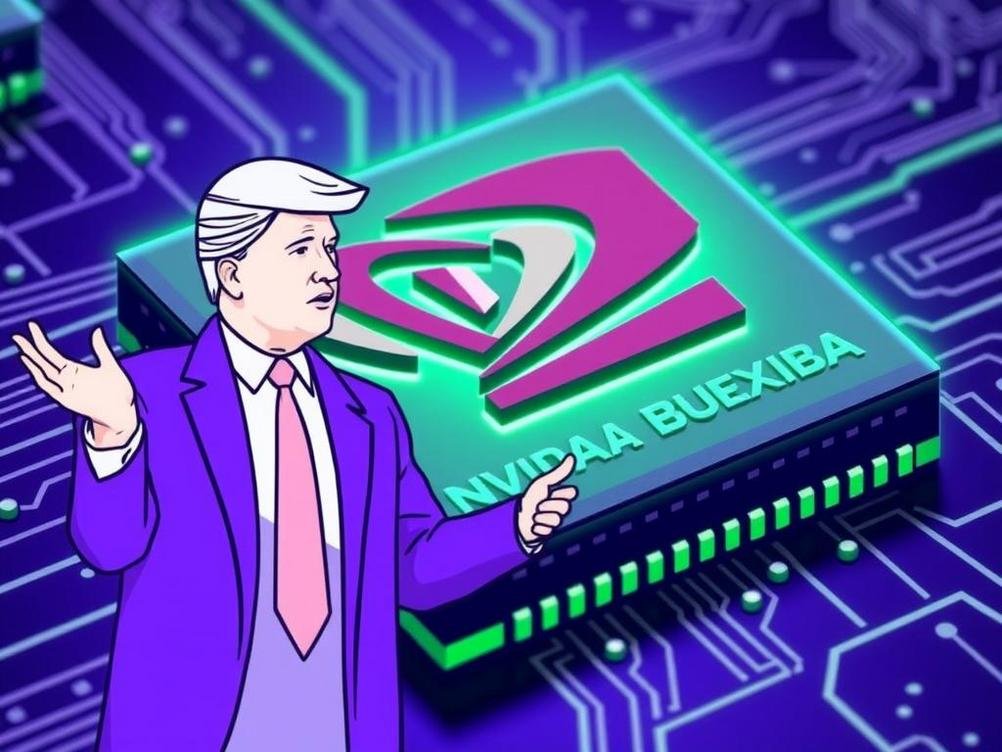
How Trump’s Flip-Flop on Nvidia Chips is Giving China an AI Edge – What You Need to Know
Ever feel like the world of tech and politics is one big game of Jenga, where one wrong move sends everything crashing? Well, that’s kinda what’s happening with Donald Trump’s recent pivot on Nvidia chips. Picture this: Nvidia, the brainy wizard behind those super-powered chips that fuel everything from your AI chatbots to self-driving cars, suddenly becomes a pawn in the U.S.-China tug-of-war. Analysts are buzzing that Trump’s decision to loosen restrictions—or at least wobble on them—might just hand China a golden ticket in the AI race. It’s like watching your favorite team fumble the ball right at the goal line. But hey, let’s dive deeper because this isn’t just about chips; it’s about who controls the future of innovation, jobs, and maybe even global power dynamics. I mean, we’re talking about AI here, the stuff that’s already changing how we live, work, and even goof around online. From beating us at chess to generating creepy realistic images, AI is everywhere, and if the U.S. slips up, China could zoom ahead faster than you can say ‘silicon valley.’ In this article, we’ll unpack the mess, explore why these chips matter so much, and ponder what it all means for the rest of us. Stick around—it’s going to be a wild ride filled with tech talk, a bit of humor, and some real-world insights that might just make you rethink your next gadget purchase.
\n
What the Heck is Trump’s Pivot on Nvidia Chips?
You know, politics and tech don’t always mix well—like oil and water, or pineapple on pizza—but Trump’s flip-flop on export restrictions for Nvidia’s advanced chips has everyone scratching their heads. Originally, the U.S. slapped bans on selling these high-tech goodies to China to keep sensitive tech out of potentially hostile hands. But lately, it seems like Trump’s team is easing up, maybe for trade deals or to avoid a full-blown economic brawl. Analysts are saying this could give China a leg up, letting them snap up these chips and supercharge their own AI projects. It’s not just about hardware; it’s about who gets to build the next big AI breakthroughs first.
Think of Nvidia’s chips as the turbo engines in a Formula 1 race car. Without them, you’re stuck chugging along in a beat-up sedan. For China, this means they can accelerate their AI research, from facial recognition systems to advanced military tech. And honestly, it’s a bit funny—here we are, trying to play hardball with restrictions, and then we loosen the reins? It’s like telling your kids not to eat candy before dinner and then handing them the whole bag. But on a serious note, this shift could erode U.S. dominance in AI, especially since China has been pouring billions into their tech sector. According to a recent report from the Brookings Institution, China’s AI investments have surged by over 30% in the past few years, and easier access to Nvidia’s tech could widen that gap even more.
To break it down simply, here’s a quick list of what Trump’s pivot might involve:
\n
- \n
- Loosening export controls on certain Nvidia GPUs, which were previously restricted to prevent military applications in China.
- Potential negotiations for better trade terms, which could prioritize short-term economic gains over long-term security.
- Increased availability of cutting-edge AI hardware for Chinese firms, giving them an edge in developing things like autonomous weapons or advanced surveillance tools.
\n
\n
\n
Why Nvidia Chips Are the Secret Sauce in the AI World
Okay, let’s get nerdy for a second—Nvidia’s chips aren’t just fancy computer parts; they’re like the steroids of the AI universe. These Graphics Processing Units (GPUs) handle massive amounts of data super fast, which is perfect for training AI models. Imagine trying to teach a dog new tricks; with Nvidia’s tech, it’s like having a team of trainers instead of just one person. Without restrictions, China could use these chips to train their AI systems more efficiently, speeding up everything from medical research to, yep, spying tech. It’s wild how something as small as a chip can tilt the balance of power.
Here’s a fun fact: Nvidia’s A100 and H100 chips are so powerful that they’re used in everything from NASA’s simulations to your favorite video games. In the AI race, they’ve become indispensable because they process data at speeds that make traditional CPUs look like they’re moving in slow motion. For instance, OpenAI’s ChatGPT relies on similar tech to churn out responses in seconds. If China gets unrestricted access, they could catch up—or even surpass—the U.S. in AI capabilities. And let’s not forget the humor in this: It’s like giving your rival the keys to your high-performance sports car and saying, ‘Don’t drive too fast!’ Yeah, right.
To put it in perspective, consider this example. In the U.S., companies like Google and Microsoft use Nvidia chips to power their AI tools, but if China starts hoarding them, we might see a surge in their own innovations. A study by Statista shows that global AI spending is expected to hit $200 billion by 2025, with China accounting for a big chunk. Here’s a simple list of why these chips are game-changers:
\n
- \n
- They handle parallel processing, meaning they can work on thousands of tasks at once, which is crucial for complex AI algorithms.
- Energy efficiency—Nvidia’s chips use less power for the same output, making them ideal for large-scale operations (check out Nvidia’s official site for more deets).
- Versatility, from healthcare AI that detects diseases early to entertainment AI that creates deepfake videos.
\n
\n
\n
How This Gives China a Boost in the AI Arms Race
Alright, let’s cut to the chase—Trump’s pivot could be like handing China a VIP pass to the AI party. With easier access to Nvidia’s chips, Chinese companies can ramp up their R&D without playing catch-up on hardware. This isn’t just about tech; it’s about economic supremacy. Analysts from firms like Goldman Sachs warn that this could lead to China dominating sectors like autonomous vehicles or smart cities, where AI is king. It’s almost comical how a policy shift might turn the tables, but hey, geopolitics is messy.
For example, Baidu and Tencent in China have been pushing hard on AI, and with Nvidia’s tech, they could accelerate projects that the U.S. has been leading. Think about it: If China perfects AI for facial recognition, they could export that tech worldwide, undercutting American firms. A report from the Center for Strategic and International Studies highlights that China has already filed more AI patents than the U.S. in recent years. To keep it light, it’s like cheering for your team and then realizing they’re borrowing the other side’s playbook—ouch!
In practical terms, this could mean more competition for U.S. jobs in tech. Here’s a quick breakdown of the potential impacts:
\n
- \n
- Accelerated AI development in China, potentially leading to breakthroughs in areas like quantum computing.
- Increased global influence, as China shares its AI tech with allies, much like how the U.S. does with NATO partners.
- Risks of misuse, such as in surveillance states, which could raise ethical questions (for more on AI ethics, check out AI Ethics resources).
\n
\n
\n
The Wider Stakes: US-China Rivalry in AI
Beyond the chips, this whole saga is part of a bigger showdown between the U.S. and China over who calls the shots in AI. It’s like a high-stakes poker game where both sides are bluffing with their tech cards. The U.S. has led the charge with innovations from companies like Apple and Amazon, but China’s government-backed initiatives are closing the gap fast. Trump’s move might be a short-term win for trade, but it could cost us long-term leadership in AI, affecting everything from economy to national security.
Take a look at real-world stats: According to the World Economic Forum, AI could add $15.7 trillion to the global economy by 2030, and China is eyeing a huge slice. It’s not all doom and gloom, though—maybe this will spark more innovation in the U.S., like investing in homegrown alternatives. I mean, who doesn’t love a good underdog story? But seriously, if we’re not careful, we might wake up to a world where Chinese AI standards dominate, influencing how we use tech daily.
To illustrate, compare it to the space race of the 1960s. The U.S. won by pouring resources into NASA, but today, China’s lunar missions are stealing the spotlight. A list of key rivalry points includes:
\n
- \n
- Talent wars, with both countries poaching top AI experts from universities.
- Regulatory differences—China’s looser rules might speed up development but raise privacy concerns.
- International alliances, like the U.S.-led CHIPS Act aimed at boosting domestic semiconductor production (learn more at CHIPS Act details).
\n
\n
\n
What Could Go Wrong (and What We Can Do About It)
So, if Trump’s pivot hands China the advantage, what’s the fallout? For starters, we might see increased cyber threats or even economic retaliation. It’s like opening the door to your house and hoping the burglar doesn’t steal your stuff—optimistic, but risky. Experts suggest this could lead to a brain drain from the U.S., with top talent heading to China for better opportunities. On the flip side, it might push the U.S. to innovate harder, like developing new chip tech that’s unexportable.
Let’s not sugarcoat it: A 2024 analysis from MIT Technology Review predicts that without tight controls, China could lead in AI by 2030. But hey, there’s hope—investing in education and R&D could turn this around. For instance, programs like the National AI Initiative in the U.S. are stepping up to the plate. And to keep it relatable, imagine fixing a leaky roof by patching it up; we need to address the root causes, not just the symptoms.
Here are a few actionable steps for the average person or policymaker:
\n
- \n
- Support U.S.-based tech companies by choosing American products when you can.
- Stay informed on AI developments—follow sources like Wired for the latest news.
- Advocate for balanced policies that promote innovation without giving away the farm.
\n
\n
\n
Conclusion: Shaping the Future of AI Together
In the end, Trump’s pivot on Nvidia chips is a reminder that the AI race isn’t just about gadgets—it’s about our shared future. We’ve seen how a single policy shift can ripple out, potentially giving China an edge while challenging U.S. supremacy. But instead of panicking, let’s use this as a wake-up call to double down on what makes us strong: creativity, collaboration, and a bit of that American ingenuity. Who knows, maybe this will spark a new era of innovation that benefits everyone. As we move forward, keep an eye on how AI evolves, support ethical tech practices, and remember that we’re all in this together. After all, in the wild world of AI, the real winners are those who adapt and keep pushing boundaries—so let’s make sure we’re on the right side of history.