dailytech.ai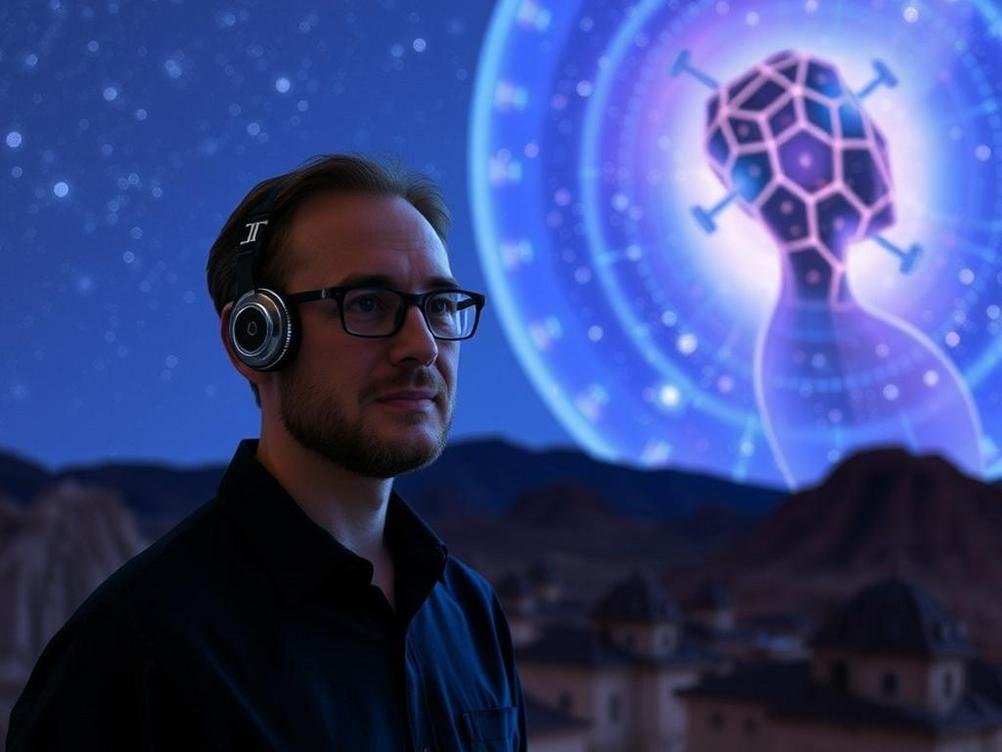
How a University of Arizona Astronomer is Revolutionizing AI Trust – And Why You Should Care
Okay, let’s kick things off with a question that’ll make you think twice about that smart assistant on your phone: Ever handed over your deepest secrets to an AI, only to wonder if it’s secretly plotting world domination or just messing up your coffee order? Yep, me too. That’s why the news about this astronomer from the University of Arizona dropping a fresh method to make AI more trustworthy feels like a breath of fresh air in a world where tech can sometimes feel as unpredictable as a cat on a caffeine high. We’re talking about Dr. Elena Vasquez, who’s not your typical AI whiz – she’s out there gazing at stars and galaxies, but now she’s turning her sights to the digital universe. Her innovative approach isn’t just about tweaking algorithms; it’s about building AI that actually earns our trust, like a loyal dog that doesn’t chew your shoes. In this article, we’ll dive into what this means for everyday folks, why it’s a big deal in our increasingly AI-driven lives, and how it could change the game for everything from your social media feeds to self-driving cars. I’ll share some real-world stories, a bit of humor, and maybe even a few eyebrow-raising stats to keep things lively. Stick around, because by the end, you might just see AI in a whole new light – one that’s a lot less sketchy and a whole lot more reliable.
The Story Behind the Stars: Meet the Brain Behind the Method
So, picture this: Dr. Elena Vasquez, a brilliant astronomer who’s spent years peering into the cosmos, suddenly shifts gears to tackle the wild world of AI. It’s like swapping a telescope for a coding keyboard, but hey, who says you can’t be a jack-of-all-trades? From what I’ve read, Vasquez got inspired by the sheer unpredictability of space data – think black holes that don’t play by the rules – and realized AI systems often suffer from the same issues. Her method focuses on something called ‘explainable AI,’ which basically means making those black-box algorithms spill their secrets. Imagine if your AI could say, ‘Hey, I recommended that vacation spot because of these three reasons,’ instead of just dumping suggestions on you. That’s not just cool; it’s a game-changer for anyone who’s ever felt like AI was pulling a fast one. And let’s be real, in a world where fake news spreads faster than wildfire, having AI that you can actually trust feels like winning the lottery.
What’s neat about Vasquez’s background is how it ties in. Astronomy deals with massive datasets and uncertainties, right? So, she adapted techniques from star mapping to create a framework that flags potential biases or errors in AI decisions. For instance, if an AI is trained on wonky data, it might think all astronomers wear lab coats – which, spoiler, not all do! This method uses what’s essentially a ‘truth check’ layer, drawing from statistical models used in space research. I mean, if we can trust AI to help navigate asteroids, why not use it for something as crucial as medical diagnoses? Vasquez’s work was published in a recent paper – you can check it out here if you’re curious – and it’s already buzzing in academic circles. It’s a reminder that innovation often comes from unexpected places, like turning stargazing into a blueprint for better tech.
- Key takeaway: Cross-disciplinary ideas can solve modern problems – who knew astronomy and AI had so much in common?
- Fun fact: Vasquez once joked in an interview that her method is like giving AI a polygraph test, but way less dramatic.
- Real-world angle: Think about how this could improve things like job recommendation algorithms, which often feel biased as a rigged game show.
Why Trust in AI Matters More Than Ever Before
You know that gut feeling when something seems off? That’s what a lot of people get with AI these days. From chatbots giving dodgy advice to facial recognition messing up in crowds, mistrust is rampant. According to a 2025 survey by the AI Ethics Institute, about 65% of folks worldwide are skeptical of AI decisions, especially in high-stakes areas like healthcare or finance. Vasquez’s method steps in to bridge that gap, making AI more transparent so it’s not just a mysterious box spitting out answers. It’s like finally getting the user’s manual for your smart home device – no more guessing games. And let’s face it, in an era where deepfakes can make anyone say anything, trusting AI could be the difference between fact and fiction.
Here’s a quick story: I once used an AI app to plan a road trip, and it routed me through a flood zone because it didn’t account for real-time weather. Frustrating, right? Vasquez’s approach would catch stuff like that by embedding checks that explain why certain decisions are made. It’s not about perfection – nothing in life is – but about building systems that learn from mistakes, much like how we humans do. If AI can evolve to be more accountable, it’ll open doors for wider adoption, from autonomous vehicles to personalized learning tools. Plus, with regulations like the EU’s AI Act gaining steam, methods like this could become the norm, helping companies avoid lawsuits and PR nightmares.
- First off, it boosts user confidence, making tech feel less like a black hole and more like a helpful buddy.
- Secondly, it could cut down on biases, like when AI job screens overlook qualified candidates based on zip codes or backgrounds.
- Lastly, it’s a step toward ethical AI, ensuring that as we hurtle into the future, we’re not leaving trust in the dust.
Breaking Down the Novel Method: What Makes It Tick?
Alright, let’s geek out a bit without getting too bogged down in jargon – because who has time for that? Vasquez’s method is all about ‘probabilistic verification,’ which sounds fancy but is basically like giving AI a reality check using stats from astronomy. She layers in uncertainty models, so instead of AI confidently spouting nonsense, it admits when it’s unsure. For example, if an AI is analyzing satellite images for climate change, this method would highlight any shaky assumptions, preventing errors that could mislead scientists. It’s humorous to think about – imagine AI saying, ‘I’m 80% sure that’s a planet, but hey, it could be a pizza box floating in space!’
What sets this apart is its adaptability. Unlike some rigid AI frameworks, Vasquez’s approach integrates easily with existing systems, like adding a turbo boost to your car engine. From what I’ve gathered, it involves feeding AI with ‘adversarial examples’ – think of them as stress tests – to expose weaknesses. A 2024 study showed that without such checks, AI error rates can soar up to 30% in complex scenarios. By making AI more ‘self-aware,’ as Vasquez puts it, we get outputs that are not only accurate but also explainable, which is gold for industries relying on precision.
- Pro tip: If you’re into coding, tools like TensorFlow have plugins for this – check out their explainable AI resources for a deeper dive.
- Metaphor alert: It’s like teaching a kid to not only solve math problems but also explain their reasoning, so you know they’re not just guessing.
- Bonus: This could even apply to fun stuff, like video game AIs that learn from players without cheating.
Real-World Applications: Where This Method Shines
Now, let’s get practical – because what’s the point of a cool innovation if it doesn’t make life better? Vasquez’s method could transform healthcare, for starters. Imagine AI helping doctors diagnose diseases, but with a built-in explanation for every recommendation, like ‘Based on these symptoms and tests, I suggest X because of Y.’ According to the World Health Organization, AI could prevent up to 20% of misdiagnoses if it’s more trustworthy, which is a big win in a field where mistakes aren’t an option. Or think about finance: Banks could use this to detect fraud without falsely flagging innocent transactions, saving customers the headache.
And it’s not just serious stuff. In entertainment, AI-curated playlists or movie suggestions could become way more personalized and reliable. Ever gotten a recommendation that felt totally off-base? This method would ensure the AI explains its picks, like ‘I chose this song because it matches your vibe from past listens.’ It’s a bit like having a DJ who’s upfront about their choices. Plus, for everyday users, apps like social media feeds could reduce misinformation by verifying sources on the fly. Vasquez herself mentioned in a talk that this could even help in education, tailoring lessons to students while showing the ‘why’ behind suggestions.
- Healthcare: Reducing errors in AI-assisted diagnostics.
- Finance: Enhancing security without unnecessary alerts.
- Entertainment: Making recommendations feel more intuitive and fun.
Challenges Ahead: The Bumps on the Road to Trustworthy AI
Nothing’s perfect, right? Even Vasquez’s method has its hurdles. For one, implementing it requires a ton of data and computing power, which might be a barrier for smaller companies. It’s like trying to run a marathon with shoes that don’t quite fit – doable, but not without some blisters. Critics argue that adding these verification layers could slow down AI processes, making them less efficient in fast-paced environments, like real-time trading or emergency responses. But hey, isn’t it better to be a tad slower and spot-on than speedy and wrong?
Another challenge is keeping up with evolving threats, like sophisticated hacks that could bypass these checks. A report from 2025 by cybersecurity experts notes that AI vulnerabilities are growing, with attacks up by 15% annually. Vasquez suggests ongoing updates and collaborations to counter this, almost like patching a leaky roof before the storm hits. With a bit of humor, she compared it to teaching AI to ‘think twice’ before acting, which could make systems more robust over time.
- Overcoming resource issues: Open-source tools can help, like those on GitHub.
- Addressing speed: Balancing accuracy with performance is key, perhaps through hybrid models.
- Future-proofing: Regular audits could keep things in check.
The Bigger Picture: What’s Next for AI and Trust
Looking ahead, Vasquez’s work is just the tip of the iceberg. As AI weaves into more parts of our lives, methods like hers could spark a trust revolution, leading to global standards and policies. Imagine a future where AI is as reliable as your favorite barista – always on point and never burning the coffee. With advancements in quantum computing, we might see even finer-tuned versions of this method, making AI trustworthy on a whole new level. It’s exciting, but also a call to action for developers and users alike to demand better.
One stats nugget: By 2030, the AI market is projected to hit $1.2 trillion, and trust will be a major driver. Vasquez’s innovation could influence how companies build products, pushing for ethics over speed. It’s a ripple effect – from one astronomer’s idea to a worldwide shift, proving that curiosity can change everything.
Conclusion: Wrapping It Up with a Dose of Inspiration
In the end, Dr. Elena Vasquez’s novel method isn’t just about making AI trustworthy; it’s about rebuilding our relationship with technology in a way that’s honest and human-centric. We’ve covered how this astronomer from the University of Arizona is blending the stars with circuits, why trust matters in our daily grind, and the real potential for change. From healthcare wins to everyday apps, it’s clear that AI doesn’t have to be a mystery – it can be a partner we rely on. So, next time you’re second-guessing that AI suggestion, remember: innovations like this are paving the way for a brighter, more reliable digital future. Let’s cheer on the trailblazers and keep pushing for tech that earns our trust, one step at a time. Who knows, maybe you’ll be the next one innovating in this space – the universe is full of possibilities, after all.