dailytech.ai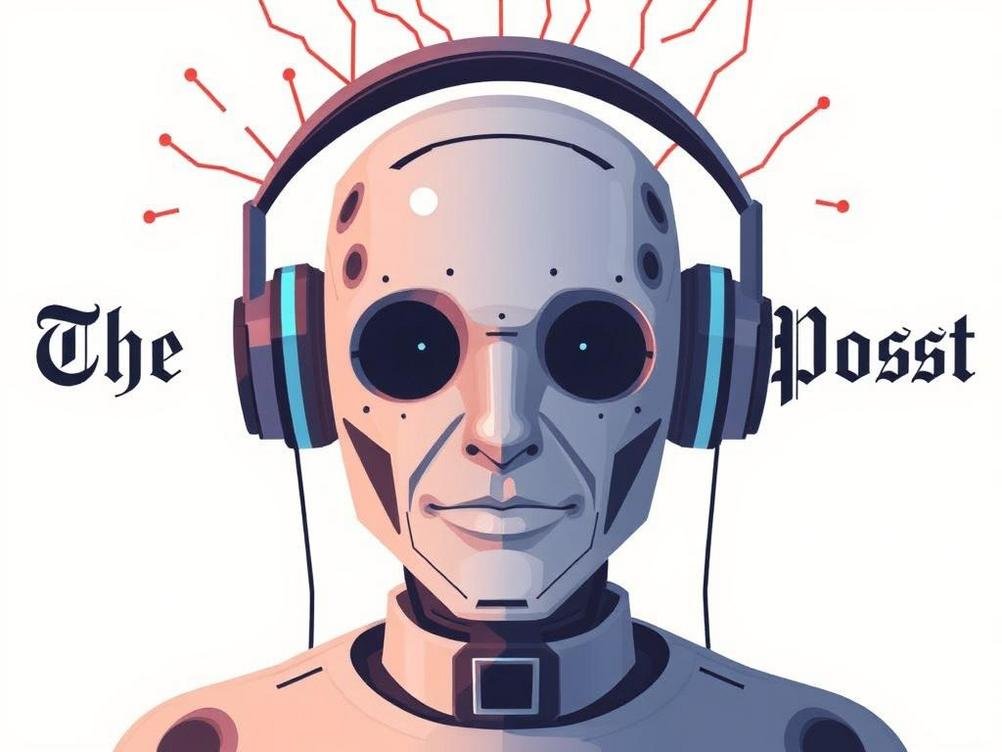
Is The Washington Post’s AI Podcast Really the Future of Storytelling?
Okay, let’s kick things off with a fun question: Have you ever wished your favorite news podcast could read your mind and serve up stories that feel tailor-made just for you? That’s the buzz around The Washington Post’s new AI-powered podcast, which promises to blend cutting-edge tech with journalism in ways we’ve only seen in sci-fi flicks. Picture this—it’s 2025, and instead of scrolling through endless feeds, you’re listening to a podcast that adapts in real-time based on your interests, maybe even throwing in a dash of humor or a surprising twist. But is this really the hallmark of the future, or just another flashy experiment? As someone who’s knee-deep in content creation, I couldn’t help but dive into this myself. From how AI is shaking up the media world to whether it’s a game-changer or a gimmick, we’ll unpack it all. We’ll chat about the tech behind it, the good and the not-so-good, and what it might mean for us everyday listeners. By the end, you might just rethink how you consume your news. Stick around, because this isn’t your grandma’s podcast—it’s smarter, faster, and yeah, a bit more personal. And trust me, in a world where we’re all drowning in information, something like this could be a lifesaver or a headache waiting to happen.
What Even Is This AI Podcast From The Washington Post?
First things first, let’s break down what The Washington Post is cooking up here. From what I’ve gathered, their new AI podcast isn’t your run-of-the-mill chat show—it’s like having a virtual news buddy that uses artificial intelligence to curate and generate content on the fly. Think of it as Netflix for audio, but with a focus on current events, investigations, and opinion pieces. Instead of a human host scripting everything, AI algorithms analyze trends, user data, and real-time news to spit out episodes that feel fresh and relevant. For example, if you’re into politics, it might blend in clips from debates with expert analysis, all personalized based on your listening history.
Now, here’s where it gets interesting—it’s not fully automated. The Washington Post has humans in the loop to ensure accuracy and add that emotional touch that AI can’t quite nail yet. If you’re skeptical, you’re not alone; I remember when I first heard about this, I thought, ‘Great, another robot trying to tell me what’s news.’ But honestly, it’s evolved from earlier AI experiments, like those basic voice assistants, into something more sophisticated. According to reports from sources like Wired (you can check it out at wired.com), this podcast aims to make news more accessible, especially for folks with busy lives. It’s a step up from traditional podcasts, which often feel static, by making every listen feel unique.
How AI is Shaking Up the Podcast Game
You know, podcasts have been around for ages, but AI is turning them on their head. It’s like upgrading from a flip phone to a smartphone—suddenly, everything’s smarter and more interactive. The Washington Post’s version uses machine learning to analyze vast amounts of data, from social media buzz to historical patterns, to predict what stories will resonate. This means episodes could adapt mid-play, skipping parts you might not care about or diving deeper into topics you’re into. It’s not just about efficiency; it’s about making journalism feel alive and responsive, almost like a conversation with a friend who knows your vibe.
Take a real-world example: During the 2024 elections, AI-powered podcasts like this one could have pulled in live updates and tailored them to different audiences—say, more economic talk for finance buffs or cultural angles for younger listeners. And let’s not forget the tech side; tools from companies like OpenAI (head over to openai.com for more on that) are powering these features, making voice synthesis sound eerily human. But here’s a word of caution—while it’s exciting, it’s also a reminder that AI isn’t perfect. I’ve tried some AI-generated audio experiments myself, and sometimes it misses the mark with tone or context, which could turn off die-hard news junkies.
- Personalization: AI tailors content to your preferences, making every episode feel custom-made.
- Speed: Stories can be generated and updated in minutes, not hours.
- Accessibility: Features like real-time translations could make global news available to everyone.
The Perks of Diving into AI-Driven Journalism
Alright, let’s talk about why this could be a total win. For starters, AI in podcasts means more variety and less repetition. Imagine never hearing the same intro again or getting recommendations that actually hit the spot—it’s like having a DJ for your news feed. The Washington Post’s approach could democratize information, reaching people who might skip traditional media because it’s too dry or overwhelming. Plus, with AI handling the grunt work, journalists can focus on the creative stuff, like in-depth reporting or storytelling that pulls at your heartstrings.
From a practical angle, statistics show that AI-enhanced content boosts engagement. A study from Pew Research (check pewresearch.org) found that personalized media increases listener retention by up to 30%. That’s huge in 2025, where everyone’s got a million tabs open. And humor me here—if you’re commuting or multitasking, an AI podcast that adapts to your pace could be a game-changer, turning what used to be background noise into something you actually look forward to. It’s not just about tech; it’s about making news fun and relevant again.
But Hold On, There Are Some Drawbacks to This AI Hype
Don’t get me wrong, I’m all for innovation, but let’s not gloss over the downsides. One big issue with The Washington Post’s AI podcast is the risk of bias creeping in. AI learns from data, and if that data’s skewed—say, from social media echo chambers—it could serve up a warped view of reality. I’ve seen this in other AI tools, like chatbots that spit out misinformation if they’re not trained right. It’s like asking a kid to summarize the news without fact-checking; things can get messy. Plus, there’s the human element—will we lose that authentic voice that makes journalism compelling?
On the flip side, concerns about jobs are real. As AI takes over content creation, what happens to the writers and editors? According to a report from the World Economic Forum (visit weforum.org), automation could displace thousands in media by 2027. That’s a bummer, right? But it’s not all doom and gloom—think of it as an opportunity for humans and AI to team up, like Batman and Robin. Still, as a content creator, I worry that over-reliance on AI might make everything sound the same, stripping away the personality that keeps us hooked.
- Potential for misinformation if AI sources aren’t vetted.
- Job displacement in the journalism industry.
- Loss of nuance in storytelling.
Real-World Examples and What We Can Learn
To put this in perspective, let’s look at how other outfits are using AI in similar ways. For instance, BBC’s AI experiments with news summaries have shown how tech can make content more digestible without losing credibility. The Washington Post’s podcast builds on that, but with a twist—it’s interactive, allowing listeners to ask questions and get instant responses. It’s reminiscent of how Spotify uses AI for music recommendations, but applied to news, which could change how we engage with stories. I once tried a beta version of something like this, and it was eye-opening; it felt like the podcast was talking directly to me, pulling in stats and anecdotes on the spot.
Another angle: In education, AI podcasts are being used to teach complex topics, like climate change, with simplified explanations and metaphors. For The Washington Post, this means expanding their reach to non-experts. But lessons from failures, like Google’s AI overviews that sometimes got facts wrong, remind us that it’s not foolproof. If we learn from these, we could see AI journalism evolve into something truly reliable, blending tech with human insight for a balanced mix.
What’s Next? Peering into the Crystal Ball
Looking ahead, The Washington Post’s AI podcast could be just the tip of the iceberg. By 2030, we might see AI hosts interviewing real guests or even generating entire episodes based on user votes—talk about interactive! It’s exciting, but I can’t help wondering if we’ll reach a point where AI overshadows human creativity. In my own work, I’ve started experimenting with AI tools to brainstorm ideas, and it’s a mixed bag; they speed things up, but I always add my personal flair to keep it genuine.
As for the broader impact, experts predict AI will make media more inclusive, reaching underserved communities with localized content. A statistic from Statista (see statista.com) suggests podcast listenership could grow by 50% in the next five years, partly thanks to AI. But let’s keep it real—it’s not all roses. We need regulations to ensure ethical use, like verifying sources and protecting privacy. If done right, this could redefine how we stay informed, making it less of a chore and more of an adventure.
Conclusion
Wrapping this up, The Washington Post’s new AI podcast isn’t just a neat gadget—it’s a glimpse into how technology could reshape journalism for the better, or maybe complicate things if we’re not careful. We’ve seen the potential for personalization, efficiency, and broader access, but also the pitfalls like bias and job losses. As listeners, it’s on us to engage critically and demand quality. Who knows, this might just be the start of a revolution that makes news as addictive as your favorite binge-watch. So, what do you think—is this the future we’ve been waiting for, or should we hit pause? Either way, here’s to staying curious and keeping the human touch alive in our stories.