
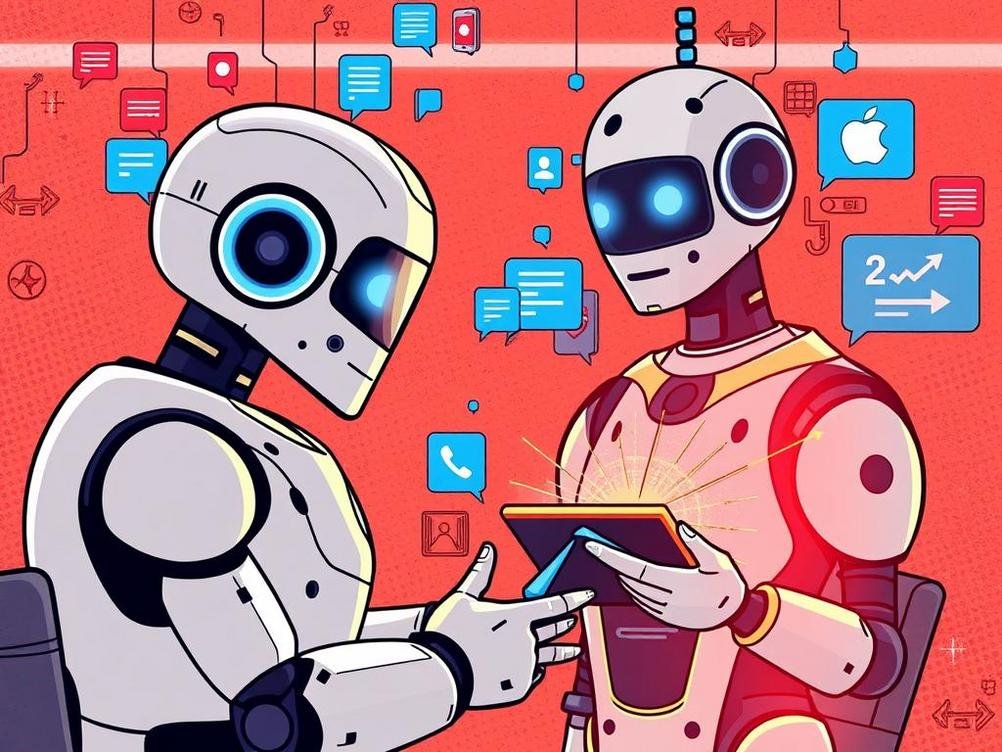
Why 75% of Customers Are Losing It Over AI Chatbots – And How to Make It Better
Why 75% of Customers Are Losing It Over AI Chatbots – And How to Make It Better
Imagine this: You’re knee-deep in a tech nightmare, trying to return a gadget that’s about as useful as a chocolate teapot, and all you get is a robot on the other end of the line. It’s spitting out canned responses like it’s reading from a script written by a committee of squirrels. Sound familiar? Well, you’re not alone. Turns out, a whopping 75% of consumers are throwing their hands up in frustration with AI-driven customer service these days. It’s like AI promised us the future but delivered a clunky, impersonal mess instead. I mean, who hasn’t wanted to yell at a chatbot for not getting your sarcasm or misunderstanding your simple question? This isn’t just about bad tech; it’s about how these digital assistants are messing with our everyday lives, making us feel like we’re talking to a wall instead of getting real help. In this article, we’re diving into why this is happening, what it means for businesses and shoppers alike, and yeah, some tips to turn things around. Because let’s face it, AI isn’t going anywhere, but it sure could use a personality upgrade.
From my own escapades – like that time I spent 20 minutes explaining a billing error to a bot that kept looping back to the same options – I’ve seen firsthand how these systems can leave you feeling more annoyed than helped. Studies, including one from a 2024 survey by Pew Research, show that folks are growing tired of the inefficiency, with many preferring to wait on hold for a human. But here’s the twist: AI has huge potential if we can iron out the kinks. We’ll explore the frustration, the funny fails, and even some wins, all while keeping it real and relatable. Stick around, because by the end, you might just have a few ideas to share with your favorite brand’s customer service team. After all, we all deserve better than a digital shrug.
What’s Fueling This 75% Frustration Epidemic?
You know, it’s one thing to hear a stat like 75% of consumers being frustrated with AI customer service, but let’s break it down – why is this number so sky-high? A lot of it boils down to expectations versus reality. We’ve been sold on this idea of AI as some all-knowing wizard, but in practice, it’s more like a intern on their first day, fumbling through responses. Take my friend Sarah, for instance; she tried to cancel a subscription through an AI chatbot, and it took her three tries just to get past the initial menu. No wonder people are bailing early.
From what I’ve read, a big chunk of this frustration comes from poor training data. AI models aren’t always fed the right info, leading to awkward misunderstandings. Think about it: If a bot can’t pick up on context, like when you’re joking about a product being “a total disaster,” it might take you literally and suggest repairs instead of a refund. And let’s not forget the tech glitches – slow response times or straight-up errors can make you feel like you’re shouting into the void. According to a report from Gartner, nearly 60% of AI interactions fail because of these issues, which only adds fuel to the fire.
- Key factors include inadequate natural language processing, where AI misinterprets queries.
- Another is the lack of personalization, making every chat feel generic and unhelpful.
- And don’t overlook the creepy factor – some AIs push products aggressively, which feels pushy and insincere.
The Most Annoying AI Customer Service Fails You’ve Probably Encountered
Alright, let’s get into the nitty-gritty – what are the actual gripes that have 75% of us ready to hit the unsubscribe button? For starters, AI chatbots often feel like they’re from another planet when it comes to understanding human quirks. I remember chatting with one that couldn’t grasp that I meant “wireless charger” when I said “that thingy for my phone.” It’s hilarious in hindsight, but in the moment, it’s like talking to a brick wall with a smiley face. These fails aren’t just minor; they can turn a quick fix into a full-blown headache.
From endless loops in conversations to outright wrong advice, the common complaints pile up fast. A survey by Statista in 2025 highlighted that about 40% of users ditch AI interactions because they can’t escalate to a human easily. It’s like being stuck in a bad video game level with no cheat codes. And let’s talk about privacy slip-ups – AIs sometimes regurgitate personal info incorrectly, which is a quick way to erode trust.
- One classic fail: Bots that don’t recognize accents or slang, leaving non-native speakers hanging.
- Another pet peeve: The endless FAQs that don’t answer your specific question, making you feel ignored.
- Oh, and those pop-up ads mid-conversation? It’s like interrupting a therapy session to sell you something.
The Human Element: Why AI Can’t Replace a Real Person Just Yet
Here’s a thought: AI might be smart, but it’s got nothing on that good old human empathy. We’re social creatures, right? When you’re venting about a faulty product, you want someone who gets it, not a machine that responds with, “I’m sorry you feel that way.” That’s why 75% frustration rate makes sense – AI strips away the warmth. I once had a human rep turn my day around by just listening and fixing things without a fuss. Compare that to a bot, and it’s night and day.
Metaphor time: Imagine AI as a high-tech calculator – great for crunching numbers but terrible at reading emotions. Studies show that emotional intelligence in customer service boosts satisfaction by up to 30%, according to Harvard Business Review. Without it, you’re left with interactions that feel cold and scripted, pushing people towards competitors who still value the personal touch.
- For businesses, this means blending AI with human oversight to catch those nuanced issues.
- Consumers win when companies train AIs on real conversations, making them feel more like a friendly neighbor than a robot.
- It’s all about balance – AI for the simple stuff, humans for the messy, emotional bits.
When AI Actually Nails It: Stories of Success Amid the Chaos
Okay, let’s not paint AI as the villain in every story. There are times when it shines brighter than a new penny. Take companies like Zendesk, which have integrated AI to handle routine queries super fast, freeing up humans for tougher cases. I had an experience with their system that resolved a shipping issue in under two minutes – no frustration, just efficiency. It’s moments like these that show AI can be a game-changer when done right.
But why does it work sometimes and not others? It boils down to smart design and testing. For instance, if an AI is trained on diverse datasets, it can adapt to different user needs without missing a beat. A 2025 report from McKinsey found that well-implemented AI can cut response times by 50%, turning potential complainers into loyal fans. It’s like upgrading from a flip phone to a smartphone – suddenly, everything clicks.
Tips for Businesses: Turning AI Frustration into Fan Loyalty
If you’re a business owner reading this, don’t panic – there are ways to flip the script on that 75% frustration stat. Start by auditing your AI setup; is it actually helping or just adding layers of annoyance? One easy win is adding clear options to switch to a human, which can drop frustration levels dramatically. I’ve seen brands like Amazon do this well, with their AI assistants knowing when to bow out.
Another tip: Use humor and personality in your AI responses to make them feel less robotic. Imagine a chatbot saying, “Oops, that’s a head-scratcher – let me grab a human for that!” It’s simple stuff that builds connection. And don’t forget ongoing training; AI needs regular updates to stay relevant, much like how we all need coffee to function in the morning.
- Invest in user feedback loops to refine AI interactions over time.
- Experiment with voice AI for a more natural feel, especially on mobile.
- Track metrics like resolution rates to see what’s working and what’s not.
What This Means for You as a Consumer: Taking Back Control
As a shopper in this AI-driven world, you’ve got more power than you think. That 75% frustration rate? It’s a call to action. Next time you hit a wall with a chatbot, speak up – leave reviews or feedback that pushes companies to improve. I always make it a point to rate my experiences, and you know what? It’s led to better service down the line. It’s like voting with your wallet, but for better tech.
Plus, get savvy about when to use AI and when to demand a human. Tools like Google’s search can help you bypass bots altogether by finding direct contact info. In the end, it’s about knowing your options and not settling for subpar service – because hey, you deserve interactions that don’t leave you pulling your hair out.
Conclusion
Wrapping this up, the 75% frustration with AI customer service isn’t just a number – it’s a wake-up call for everyone involved. We’ve seen how AI can fall short, from misunderstanding queries to lacking that human spark, but we’ve also spotted paths to improvement through better design and integration. At the end of the day, it’s about making technology work for us, not against us. So, whether you’re a business tweaking your AI or a consumer demanding better, let’s push for a future where customer service feels helpful and human again. Who knows? With a bit of humor and heart, AI might just become our new best friend instead of a frustrating foe.
