
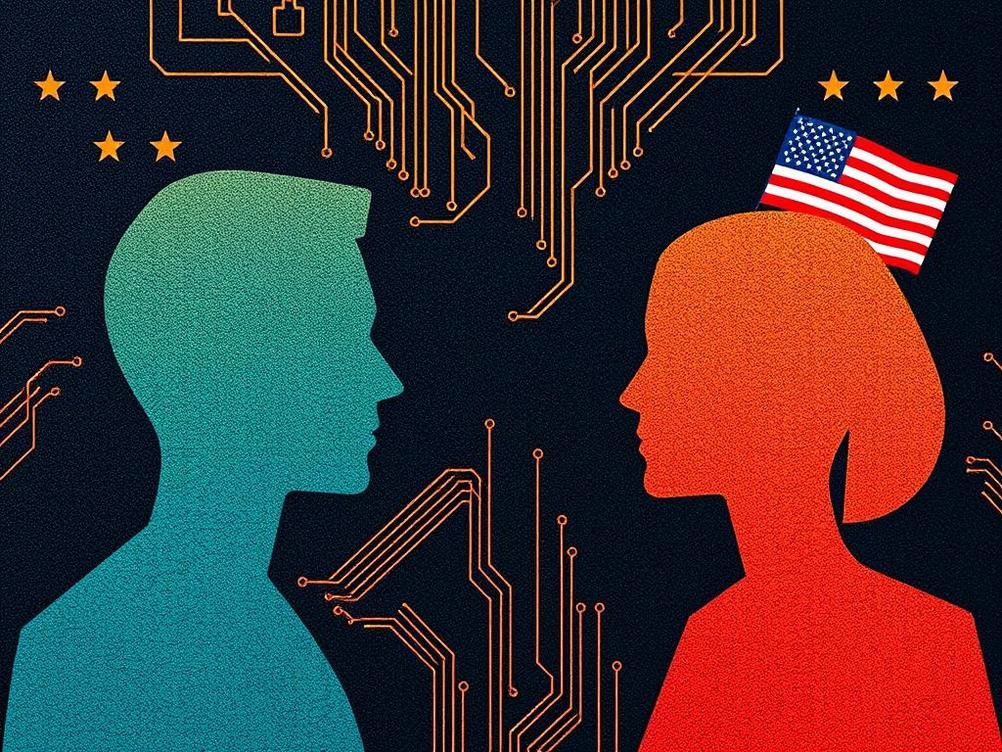
Why America Must Lead the AI Race—Bridging the Political Divide for a Smarter Future
Why America Must Lead the AI Race—Bridging the Political Divide for a Smarter Future
Imagine this: You’re at a family dinner, and your uncle who’s always ranting about politics starts going on about how AI is either going to save the world or turn us all into robots. You roll your eyes because, let’s be real, we’re all a bit divided these days—red versus blue, tech geeks versus skeptics. But then it hits you: No matter which side of the aisle you’re on, we can’t afford to lose the AI race. It’s not just about gadgets or data; it’s about jobs, security, and keeping America on top in a world that’s sprinting ahead faster than a caffeinated squirrel. Think about it—AI is already weaving into everything from your smartphone’s suggestions to national defense systems. If we’re not careful, other countries like China could zoom past us, and that means everything from economic dominance to everyday freedoms could slip away. We’ve got to unite, folks, because winning this race isn’t a luxury; it’s a necessity for our kids’ futures. In this article, I’ll dive into why bipartisanship in AI is crucial, what the real stakes are, and how we can all push America to the front of the pack. Stick around, and let’s explore how AI isn’t just tech talk—it’s about shaping a world where innovation keeps us ahead, secure, and, hey, maybe even a little more connected.
What the Heck is the AI Race, Anyway?
You know, when people say “AI race,” it sounds like something out of a sci-fi flick, but it’s way more down-to-earth than that. Essentially, it’s nations and companies duking it out to develop the most advanced artificial intelligence tech, from smart algorithms that predict weather patterns to AI that could revolutionize healthcare or even drive your car. America has been a frontrunner for years, thanks to giants like Google and OpenAI, but lately, countries like China are throwing billions at it, building their own supercomputers and research labs. It’s like we’re in a global marathon, and if we trip now, we might not catch up. The funny thing is, AI isn’t just about who builds the flashiest robot; it’s about who controls the future economy. For instance, AI could automate millions of jobs, but if we’re leading, we can steer it toward creating new ones instead of wiping them out.
Let me break this down with a quick list of what makes up this race:
- Tech Innovation: From machine learning to neural networks, it’s all about who cracks the code first. Take OpenAI’s ChatGPT—it’s not just a chatbot; it’s a glimpse of how AI can handle complex tasks, but China’s Baidu is right on its heels with their own versions.
- Economic Power: Whichever country dominates AI stands to gain trillions. According to a report from McKinsey, AI could add up to $13 trillion to the global economy by 2030—imagine missing out on that slice of the pie!
- Global Influence: AI isn’t neutral; it shapes policies, ethics, and even warfare. If America doesn’t lead, we might end up following rules set by others, which could mean stricter controls on our own tech freedoms.
And here’s a quirky thought: Picture AI as that overachieving kid in school who everyone wants on their team. If America’s not coaching that kid, we’re just cheering from the sidelines, which isn’t exactly a winning strategy.
Why Politics Shouldn’t Mess with Our AI Mojo
Alright, let’s get real—America’s political landscape is a mess, with folks on opposite sides yelling at each other like they’re in a bad reality TV show. But when it comes to AI, we’ve got to put that aside because this isn’t about elections; it’s about survival. The original title you mentioned hits the nail on the head: Even if we’re divided, we all agree that America needs to win. Bipartisanship here means Democrats and Republicans teaming up to fund research, protect intellectual property, and make sure AI regulations don’t stifle innovation. If we keep fighting internally, we’re basically handing the baton to competitors. I mean, think about it: During the Space Race, both parties rallied behind NASA, and look what that got us—the moon! AI could be our next giant leap, but only if we stop the infighting.
Here’s why crossing the aisle is smarter than ever:
- Shared Benefits: AI can boost education, healthcare, and jobs for everyone, regardless of your vote. For example, AI-driven tools in schools could personalize learning, helping kids in rural areas catch up without anyone arguing over party lines.
- National Security: Imagine AI being used for cyber defense—it’s not just about protecting emails; it’s about safeguarding the grid. Both sides need to agree on investments, like the billions poured into the CHIPS Act, which supports tech manufacturing.
- Innovation Over Ideology: Politics loves to complicate things, but AI moves fast. We need policies that encourage startups, not bury them in red tape. It’s like trying to win a race with one hand tied behind your back—silly, right?
At the end of the day, if we don’t bridge this divide, we’re just shooting ourselves in the foot. Humor me here: What’s the point of debating taxes if AI from another country is already running the show?
The High Stakes: What Happens if America Doesn’t Cross the Finish Line First?
Okay, let’s not sugarcoat it—losing the AI race isn’t just a bummer; it’s a full-on disaster movie waiting to happen. If China or another powerhouse pulls ahead, they could dominate global markets, influence international standards, and even sway geopolitical power. We’re talking about scenarios where AI tech controls supply chains, predicts economic crashes, or worse, tips the scales in military conflicts. According to a 2024 report from the Brookings Institution, China’s AI investments have surged, potentially overtaking the US by 2027 if we don’t step up. That’s scary because it means our economy could take a hit, with jobs moving overseas and innovations happening without American input.
To put it in perspective, let’s look at a couple of real-world examples. Take autonomous vehicles: If Chinese companies like Tencent lead the way, they might set the global standards for self-driving cars, leaving American firms like Tesla playing catch-up. Or consider healthcare—AI could revolutionize drug discovery, but if we’re not in the lead, we might end up paying more for treatments developed elsewhere. It’s like being the last kid to get a smartphone; you miss out on all the cool stuff until it’s too late.
- Economic Fallout: Millions of jobs at risk if AI advances without us, leading to inequality and slower growth.
- Ethical Concerns: Without American influence, AI ethics might prioritize profit over privacy, as seen in some questionable data practices from foreign tech giants.
- Global Standing: We could lose our soft power, where the world looks to us for leadership, not the other way around.
How America’s Innovators Are Already Stepping Up
Despite the doom and gloom, there’s plenty of good news—America’s got a ton of brainpower and creativity firing on all cylinders. Companies like NVIDIA and Microsoft are pushing the envelope with AI chips and cloud computing, and initiatives like the National AI Research Resource Task Force are bringing government and private sectors together. It’s inspiring to see how startups in Silicon Valley are turning AI into practical tools, like apps that detect diseases early or optimize farming for better yields. But we need to amp this up, folks, because isolated efforts won’t cut it against coordinated global competition.
For instance, let’s chat about OpenAI’s partnership with Microsoft—it’s a prime example of how collaboration can accelerate progress. They’re not just building cool models; they’re making AI accessible, which helps everyone from small businesses to researchers. If we can replicate this on a national scale, we’d be unstoppable. And hey, it’s not all corporate—universities like MIT are churning out talent, proving that education is our secret weapon.
Steps We Can Take to Keep America in the Lead
So, what do we do about it? First off, let’s stop twiddling our thumbs and get proactive. Policymakers need to invest in AI education, fund R&D, and create incentives for ethical innovation. Imagine if we had a national AI strategy that encouraged public-private partnerships, like the one that boosted renewable energy. We could train more workers for AI jobs, ensuring that the tech boom lifts all boats, not just the tech elite.
Here’s a simple list of actionable steps:
- Bump Up Funding: Double down on grants for AI research, similar to how the government supported the internet’s early days.
- Educate the Next Generation: Programs in schools to teach AI basics, so kids aren’t left in the dust—think coding camps with a fun twist.
- Regulate Smartly: Set guidelines that promote safety without stifling creativity, drawing from the EU’s AI Act as a reference, but making it more America-friendly.
It’s like preparing for a big game; you need practice, teamwork, and a solid game plan. If we do this right, we’ll not only win the race but set the pace for everyone else.
Real-World Insights: Lessons from AI’s Front Lines
Drawing from history, we can see how past tech races shaped the world. Remember the internet boom? America led, and it transformed everything from communication to commerce. Now, with AI, we’re at a similar crossroads. Countries like South Korea are already integrating AI into daily life, with smart cities that reduce traffic and energy use. If we learn from these, we can avoid pitfalls and leapfrog ahead. The key is adaptability—AI isn’t static; it’s evolving, and so should our approach.
Take a metaphor: AI is like a wild horse; if you tame it properly, it can carry you far, but if you ignore it, it might buck you off. We’ve got stories like IBM’s Watson in healthcare, which shows how AI can diagnose diseases faster than doctors, saving lives and cutting costs. But we need to ensure it’s accessible and fair, not just for the wealthy.
Conclusion: Time to Rally and Race Ahead
Wrapping this up, it’s clear that the AI race is more than just tech trivia—it’s about securing America’s future in a rapidly changing world. We’ve talked about the stakes, the need for unity, and the steps we can take, and honestly, it’s exciting to think about the possibilities. Whether you’re a policy wonk or just someone curious about the next big thing, let’s commit to bridging divides and pushing innovation. After all, if we work together, America’s not just going to win this race; we’re going to redefine it. So, what’s your move? Dive into AI, support smart policies, or just spread the word—every bit helps. Here’s to keeping that innovative spirit alive and kicking!
