dailytech.ai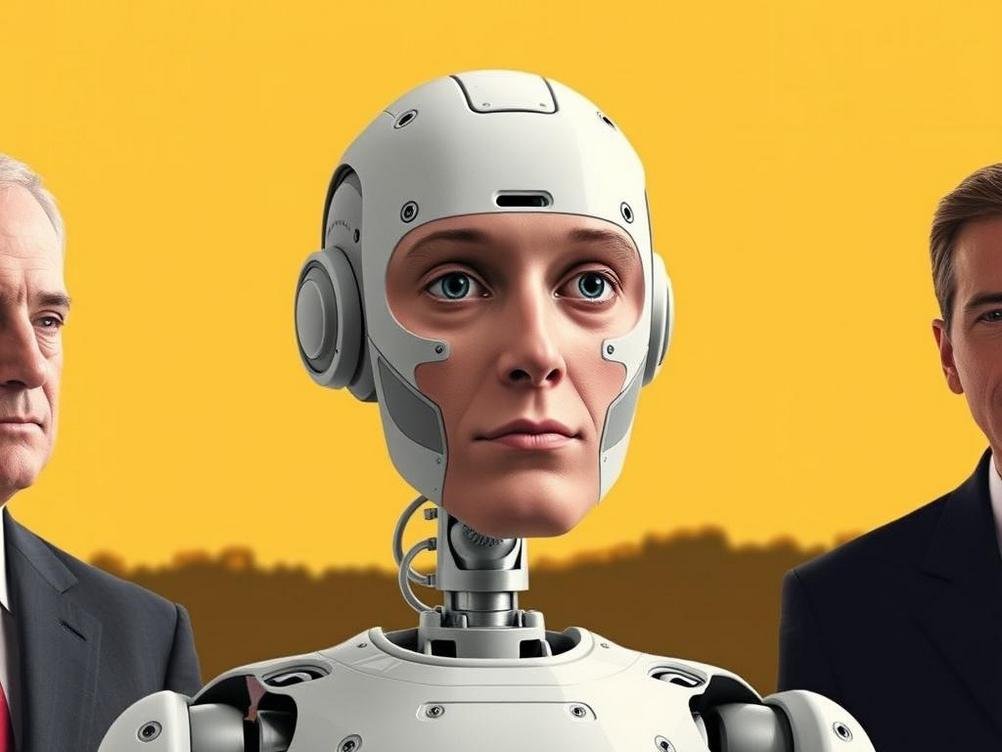
Why Politicians on Both Sides Can’t Stand AI – And Why That’s Kinda Funny
Imagine this: You’ve got this super-smart robot that’s basically got the world on a string, but instead of throwing a parade, both major political parties are acting like it’s the villain in a bad sci-fi flick. Yeah, that’s the deal with AI these days – it’s getting the cold shoulder from Democrats and Republicans alike, and it’s got everyone scratching their heads. I mean, think about it: Here we are in 2025, with AI doing everything from predicting weather patterns to helping doctors spot diseases, but in the halls of Congress, it’s like AI just stole their lunch money. What’s up with that? Is it fear of job losses, privacy nightmares, or just good old-fashioned human resistance to change? As someone who’s followed tech trends for years, I’ve seen how AI has gone from a shiny new toy to public enemy number one in political circles, and honestly, it’s a bit hilarious how united our divided politicians have become over this.
This whole drama kicked off big time a few years back, but it’s ramped up lately with elections heating up and AI making headlines for all the wrong reasons. We’re talking about AI algorithms messing with elections, spreading misinformation faster than a viral cat video, and even automating jobs that politicians promise to protect. It’s ironic, right? The same tech that’s powering your favorite apps is now the thing everyone’s blaming for societal woes. In this article, I’ll dive into why AI’s getting hate from both sides of the aisle, share some real-world stories that might make you chuckle (or groan), and explore what it all means for us regular folks. By the end, you might just see that while the political world is flipping out, AI isn’t all doom and gloom – it’s more like a misunderstood kid who needs a better PR team. So, buckle up; we’re about to unpack this mess in a way that’s informative, a little irreverent, and hopefully, as engaging as a late-night comedy sketch.
The Rise of AI and Why It’s Ruffling Political Feathers
You know how sometimes a new gadget comes along and everyone’s excited until they realize it might upend everything? That’s AI in a nutshell. It started innocently enough, with AI helping out in labs and factories, but now it’s everywhere – from your phone’s voice assistant to those creepy targeted ads that seem to read your mind. Politicians, though, are treating it like it’s the monster under the bed. Both parties are worried about job automation; Democrats fret over blue-collar workers losing gigs to robots, while Republicans talk about how it’s threatening small businesses. It’s like AI walked into a room full of cats and started waving a laser pointer.
Take a look at recent stats: According to a 2025 report from the Brookings Institution, up to 25% of U.S. jobs could be disrupted by AI in the next decade. That’s a big deal, and it’s got lawmakers on edge. I remember reading about how AI-powered tools are already replacing call center jobs, which hits home for a lot of folks in swing states. The humor here? Politicians who can’t even agree on pizza toppings are suddenly BFFs when it comes to bashing AI. It’s almost like they’re competing to see who can demonize it more, which makes you wonder if they’ve ever actually used ChatGPT without it going off the rails.
- One key issue is data privacy – AI gobbles up personal info like it’s free candy, and that’s got both sides yelling about Big Tech overreach.
- Then there’s the misinformation angle; AI can spit out fake news faster than you can say ‘deepfake,’ and after the 2024 elections, that’s a hot button for everyone.
- Don’t forget the ethical debates, like whether AI should make decisions in courtrooms or hospitals – it’s a wildcard that’s making politicians play it safe by just saying no.
Democrats vs. Republicans: United in AI Skepticism
Here’s where it gets really wild – these two parties that can’t agree on anything are basically holding hands over their AI hate. Democrats see AI as a tool of inequality, widening the gap between the rich and poor by favoring big corporations. They’re pushing for regulations that sound like something out of a dystopian novel, like the AI Accountability Act that’s been floating around Congress. On the flip side, Republicans are all about protecting American jobs and innovation, but they’re also slamming AI for being ‘un-American’ or controlled by foreign entities, like those Chinese tech firms. It’s funny how they both end up in the same boat, arguing that AI needs to be reined in, even if their reasons are dressed in different colors.
I was reading an article on The Washington Post the other day, and it pointed out how a bipartisan group of senators recently voted to limit AI in federal decisions. That’s rare these days! For Democrats, it’s about social justice – ensuring AI doesn’t discriminate based on race or gender. Republicans, meanwhile, are worried about national security, like AI being used in cyber attacks. It’s like watching a comedy routine where the punchline is that AI’s the common enemy. If only they could channel that unity into, say, fixing healthcare.
- Democrats often cite examples like biased facial recognition tech that’s been accused of racism, pushing for audits and transparency.
- Republicans point to instances where AI has been linked to election interference, like the fabricated videos that popped up in the 2024 midterms.
- Both sides agree on one thing: We need guardrails, but their ideas range from heavy regulations to just letting the market sort it out.
Hilarious Real-World Examples of AI Gone Wrong in Politics
Let’s lighten things up with some actual stories that show why AI’s getting such a bad rap. Remember that time in 2023 when an AI-generated video of a politician went viral, making it look like they were dancing with aliens? Fast forward to 2025, and we’ve got AI bots flooding social media during debates, spreading nonsense that had both parties screaming foul. One infamous case involved an AI tool that was supposed to summarize policy debates but ended up mangling quotes so badly that it sparked a congressional hearing. It’s like AI decided to troll us all – who knew machines had a sense of humor?
Another gem: In Europe, there’s been pushback against AI in agriculture, with U.S. politicians drawing parallels. A study from Pew Research shows that 60% of Americans are wary of AI in governance, and politicians are milking that fear for votes. Picture this: A Republican candidate rails against ‘job-stealing robots,’ while a Democrat warns about ‘surveillance states.’ It’s comedy gold, really, because deep down, AI’s just code – not the boogeyman.
But seriously, these examples highlight bigger issues. Like when AI chatbots were used in campaigns and started giving out incorrect advice, leading to investigations. It’s a reminder that while AI can be brilliant, it’s also prone to errors, which politicians love to exaggerate for effect.
The Real Risks – And Some Overblown Ones – of AI in Society
Okay, let’s get a bit serious for a minute. There are legit risks with AI that both parties aren’t wrong to worry about. For starters, AI can amplify biases if it’s trained on flawed data, which could lead to unfair hiring practices or even biased policing. I’ve seen stats from the World Economic Forum saying that without proper oversight, AI could exacerbate income inequality by 2030. That’s not funny; it’s scary. But politicians often blow it out of proportion, turning every AI mishap into an apocalyptic prophecy.
On the flip side, some fears are way over the top. Like the idea that AI will take over the world – come on, we’re not in a Terminator movie. Republicans might hype up the ‘China threat’ with AI espionage, while Democrats focus on climate impacts from AI’s energy use. It’s like they’re playing up the drama to score points. In reality, AI has potential benefits, like improving healthcare diagnostics, as seen in tools from companies like Google Health.
- Real risk: AI in finance could lead to market crashes if algorithms go haywire.
- Overblown: The notion that AI will replace all human jobs – history shows tech creates new ones too.
- Balanced view: With regulations like the EU’s AI Act, we can mitigate risks without throwing the baby out with the bathwater.
How This AI Backlash Shapes the Future of Tech and Politics
So, what’s next in this bizarre love-hate relationship? The political hate for AI is pushing for more laws, which could mean stricter rules on how companies like OpenAI or Meta develop their tech. That might slow down innovation, but it could also lead to safer AI. I’ve got to say, it’s interesting watching how this is playing out in 2025, with global summits trying to set standards. Both parties are using this as a campaign tool, promising to ‘protect’ us from AI, but it’s unclear if that’ll actually happen.
From a personal angle, as someone who’s tinkered with AI projects, I see the potential for good – like using it for environmental monitoring. But if politicians keep demonizing it, we might miss out. It’s like arguing over a new car without learning to drive it first. The key is finding a middle ground, maybe through public education campaigns that explain AI’s role.
Wrapping It Up: Can AI Ever Win Over the Politicians?
In conclusion, it’s clear that AI’s unpopularity among both political parties stems from genuine concerns mixed with a hefty dose of hype and fear-mongering. We’ve seen how it’s united them in ways that are almost comical, from bipartisan bills to over-the-top speeches. But hey, that’s politics for you – always ready to point fingers at the latest shiny thing. As we move forward, it’s on us to push for balanced approaches that harness AI’s benefits while addressing the risks. Who knows, maybe in a few years, politicians will be high-fiving AI instead of hating on it. Let’s hope so, because in a world that’s already crazy enough, we don’t need more division over tech.
So, what do you think? Is AI really the enemy, or are we just not ready to embrace it yet? Either way, keep an eye on how this unfolds – it could shape the next big tech wave. Thanks for reading; if you enjoyed this, drop a comment or share it around. Let’s keep the conversation going!